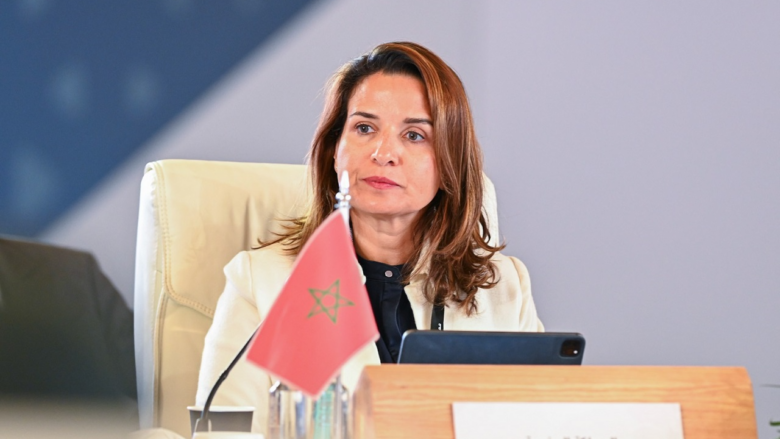
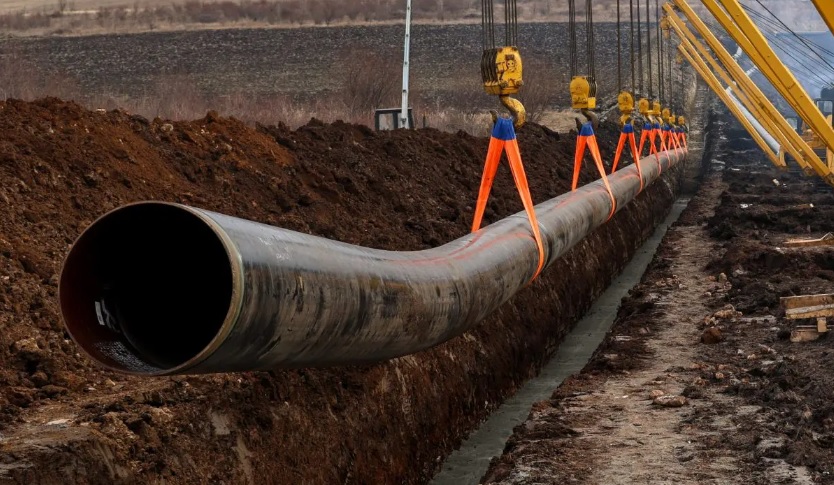
Amina Benkhadra, Director General of the National Office of Hydrocarbons and Mines (ONHYM), affirmed that the Atlantic gas pipeline project, which will connect Nigeria to Morocco through more than 10 African countries, has made significant progress in engineering and environmental impact studies, stressing that all the conditions for its success are in place.
Speaking on Saturday at the 10th edition of the Geopolitical Meetings in Trouville, northern France, Benkhadra expressed her hope to “accelerate the next stages following the signing of the project’s final investment decision and the establishment of the company responsible for overseeing subsequent phases,” according to Morocco’s state news agency MAP.
According to the Moroccan official, the project’s geostrategic and economic importance, combined with the political and institutional support it enjoys, makes its chances of success a tangible reality. She noted that the next phases will move at a faster pace once the final investment decision is signed.
Benkhadra underlined that this large-scale project embodies the strategic vision of King Mohammed VI and the shared will of Morocco and Nigeria to build a more integrated Africa through win–win development initiatives. She highlighted that the King’s initiatives for Africa are rooted in sustainable cooperation, both bilaterally and multilaterally.
She further stressed that the gas pipeline will help meet a significant part of the energy and electricity needs of the 13 countries involved in the project, home to nearly 400 million people, while also serving as a lever for the development of structural industrial sectors, particularly mining.
Benkhadra added that the project’s energy, social, and economic benefits will make Africa a key player in securing energy supplies to Europe, while contributing to diversifying the continent’s energy sources amid current global challenges.
In this regard, she explained that the next phases of the project will include the establishment of a company tasked with ensuring the practical implementation and completion of the project in line with international standards, which will provide strong momentum to accelerate progress.
She concluded by stressing that Morocco, thanks to its geostrategic location, existing energy networks, and ongoing projects such as the Nigeria–Morocco gas pipeline, green hydrogen, and interconnections with African countries, has become an advanced energy corridor and bridge between Africa and Europe.
According to MAP, the roundtable in which Benkhadra took part—alongside Tarik Hamane, Director General of the National Office of Electricity and Drinking Water—offered an opportunity to discuss the project’s strategic dimensions, its impact on regional economic dynamics, and its role in enhancing Europe’s energy security.
The meeting was also attended by Morocco’s Ambassador to Paris, Samira Sitaïl, as well as the Mayor of Trouville-sur-Mer, Sylvie de Gaetano, along with elected officials, academics, and researchers from diverse backgrounds.
This year’s Geopolitical Meetings in Trouville focused on the reality of Franco-African cooperation and the future of relations between Paris and the continent, through a series of contributions by experts, diplomats, and historians addressing the common challenges and opportunities.