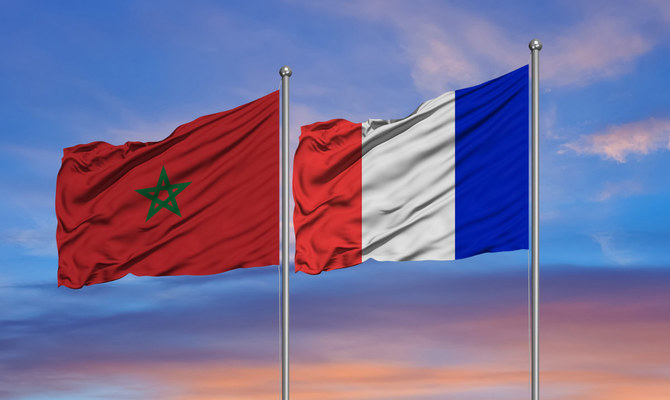
France strives to be a development partner for Morocco’s southern provinces for the benefit of the populations who aspire for a brighter future under the leadership of King Mohammed VI, French ambassador to Morocco, Christophe Lecourtier, said.
In an interview with MAP on the eve of the Morocco-France Economic Forum to be held in Dakhla, Lecourtier highlighted the enormous economic potential of these provinces, thanks to their assets, particularly in terms of renewable energy, and their geographical position, which makes them ideal for establishing themselves as a real hub in the Sahel and West Africa region.
“This is a vision shared by His Majesty King Mohammed VI. We share this vision and want to actively contribute to this development for the benefit of the people who aspire to a brighter future. We want to be partners in this future,” he said.
The French diplomat added that Morocco’s southern provinces represent a new frontier for France's multidimensional cooperation with the Kingdom, citing the opening of new French schools, a future cultural center, a visa application center, and the expansion of the French Development Agency (AFD) to include these regions.
In this regard, he considered that the holding of a Morocco-France Economic Forum in Dakhla, at the initiative of the General Confederation of Moroccan Enterprises (CGEM) and MEDEF International, through the France-Morocco Business Leaders Club, in the presence of a gathering of businessmen and women from both countries, sends a “very clear” message that this event, which traditionally took place in Rabat or Casablanca, can also be held in Dakhla.
“During this forum, themed +Morocco’s Southern Regions: Towards New Prospects to Develop the Morocco-France Economic Partnership+, we will also discuss all these marvelous opportunities provided by Dakhla and the surrounding regions,” he added.
“We will also substantiate them within the larger framework of the Kingdom’s development,” Lecourtier added, highlighting all the opportunities provided by the Morocco of today to its people and its partners, first among which is France.
The ambassador also pointed out that Morocco is present in the value chains of several industries that are crucial to France, particularly the automotive and aerospace industries, adding that the Kingdom is fully involved in the development of French industry, to the extent that the share of added value recorded in the country today is growing. “Our competitiveness is now linked,” he said.
He also pointed out that trade between Morocco and France is balanced “because we are focused on creating value in Morocco for the Moroccan market but also for re-exporting to Europe.”
“Our aim is to further expand the scope of cooperation between companies on both sides of the Mediterranean, not only in the field of trade but also in terms of setting up operations and transferring know-how for co-located development,” he explained.
Some 1,000 French companies now have subsidiaries in Morocco, he maintained, noting that French SMEs, which sometimes find it difficult to expand in European markets, would be well advised to set up in Morocco because the country is undergoing rapid development, not to mention the extension it represents towards sub-Saharan Africa.
Given that more than two-thirds of economic, commercial, and human exchanges take place between Morocco and Europe, Lecourtier called for a “more advanced” partnership, stressing that all partners, and Morocco in particular, can benefit from it.