Ecuador has reaffirmed its desire to continue its new chapter of diplomatic relations with Morocco, with no return to its previous positions regarding the Sahara issue. This comes after the South American country withdrew its recognition of the separatist Polisario Front last October and decided to move forward in establishing strong diplomatic ties with Rabat by opening an embassy in the Moroccan capital.
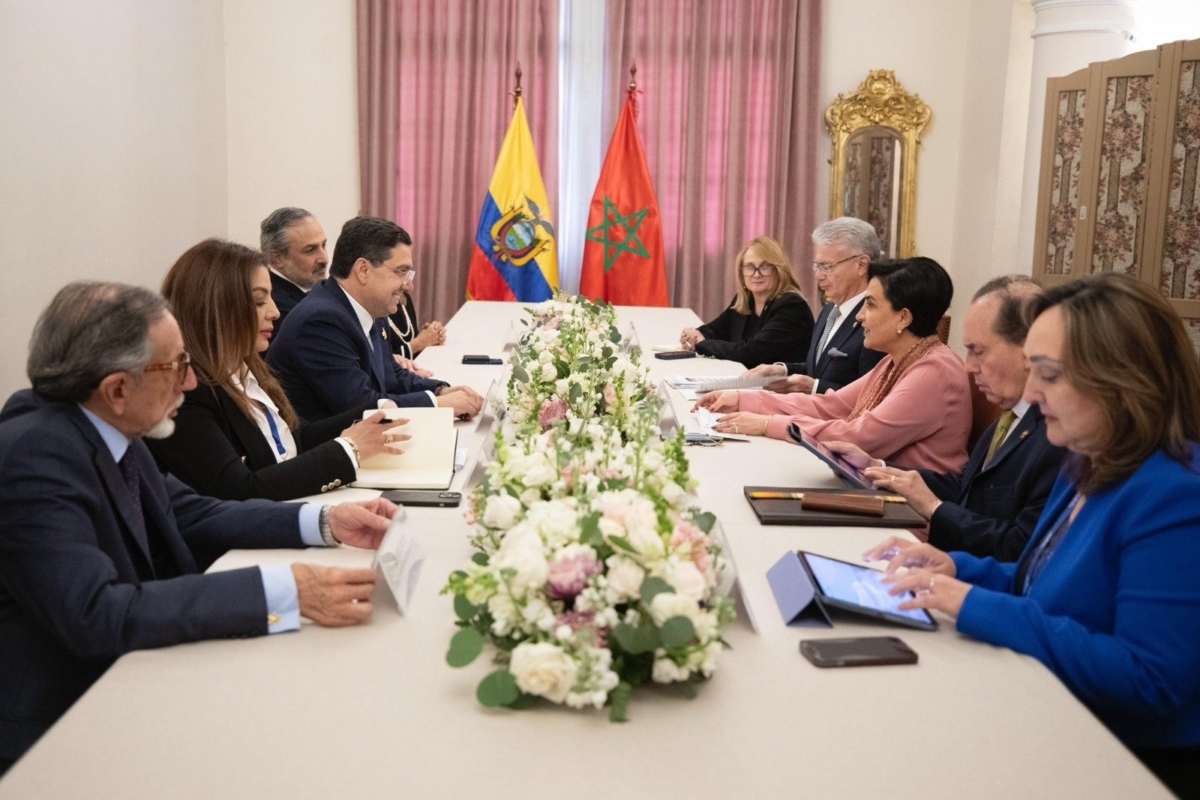
The announcement of the upcoming Ecuadorian embassy in Morocco was made during a meeting held on Saturday between Moroccan Foreign Minister Nasser Bourita and his Ecuadorian counterpart, Gabriela Sommerfeld, on the sidelines of the inauguration ceremony of Ecuador’s newly re-elected President, Daniel Noboa Azín.
The planned embassy will be Ecuador’s first diplomatic representation in the Maghreb region, signaling Morocco’s growing rapprochement with Latin American countries—a continent where Morocco has made significant diplomatic breakthroughs in recent years on the issue of the Moroccan Sahara.
This move is part of an active diplomatic momentum between Rabat and Quito, which began when President Daniel Noboa announced in October 2023 that Ecuador would withdraw its recognition of what the Polisario refers to as the “Sahrawi Republic.” The decision was widely welcomed by Morocco, and Noboa’s continued presidency presents another opportunity to deepen bilateral relations.
Ecuador had originally recognized the separatist entity in 1983 and allowed the opening of its so-called “embassy” in Quito in 2009. However, the withdrawal decision, officially communicated by Ecuador’s Foreign Minister in a previous phone call with Minister Bourita, clearly signaled the closure of that chapter and the beginning of a new relationship grounded in political realism, as Ecuadorian media reports indicated.
Ecuador’s decision to enhance and continue its relations with Morocco also reflects the ongoing retreat of the Polisario Front in Latin America, a region that, for many years, was considered one of the main strongholds supporting the separatist narrative.
The Ecuadorian move came in tandem with a similar decision by other countries, notably Panama, which also announced the suspension of its relations with the so-called “Sahrawi Republic”—a significant blow to the Polisario, especially given that Panama was the first Latin American country to recognize the entity back in 1978.
Panama’s Ministry of Foreign Affairs recently confirmed that the decision was made out of respect for international law and in support of United Nations efforts to find a peaceful and lasting solution to the Sahara dispute—a position that represents a form of positive neutrality favorable to Morocco and its autonomy initiative.
Observers agree that Morocco has successfully convinced its Latin American partners of the viability of its proposal through what is widely regarded as a “realistic” foreign policy. This approach emphasizes mutual interests and strategic partnerships rather than the ideological discourse the Polisario has relied on for decades, according to political analysts previously interviewed by Assahifa.
In this same context, Morocco has managed to expand its base of support across the Latin American continent, with recent developments including the Paraguayan Senate’s endorsement of the autonomy plan, and the Dominican Republic’s recognition of Moroccan sovereignty over the Sahara along with its intention to open a consulate in Dakhla.
The upcoming Ecuadorian embassy in Rabat is expected to become a new platform for strengthening bilateral cooperation in areas such as economy, education, and culture—giving a new impetus to the relations between the two countries beyond the political dimension. This diplomatic rapprochement is also expected to broaden Morocco’s presence in the Latin American sphere, through a pragmatic diplomatic approach, especially concerning its foremost national cause.