The International Migration Research Institute has stated in a recent report that Morocco now holds a central position in the geopolitical balance of North Africa. The report predicts that China and Russia are likely to join the group of major countries supporting Morocco’s autonomy plan as a solution to the Sahara dispute within the coming months.
According to the report, titled “Morocco at a Crossroads” and published on June 24, 2025, the Kingdom of Morocco is considered one of the “most stable countries in the Maghreb region,” despite ongoing political tensions with Algeria. This stability, the report notes, is one of the main reasons behind the United States’ near-unconditional support for Morocco.
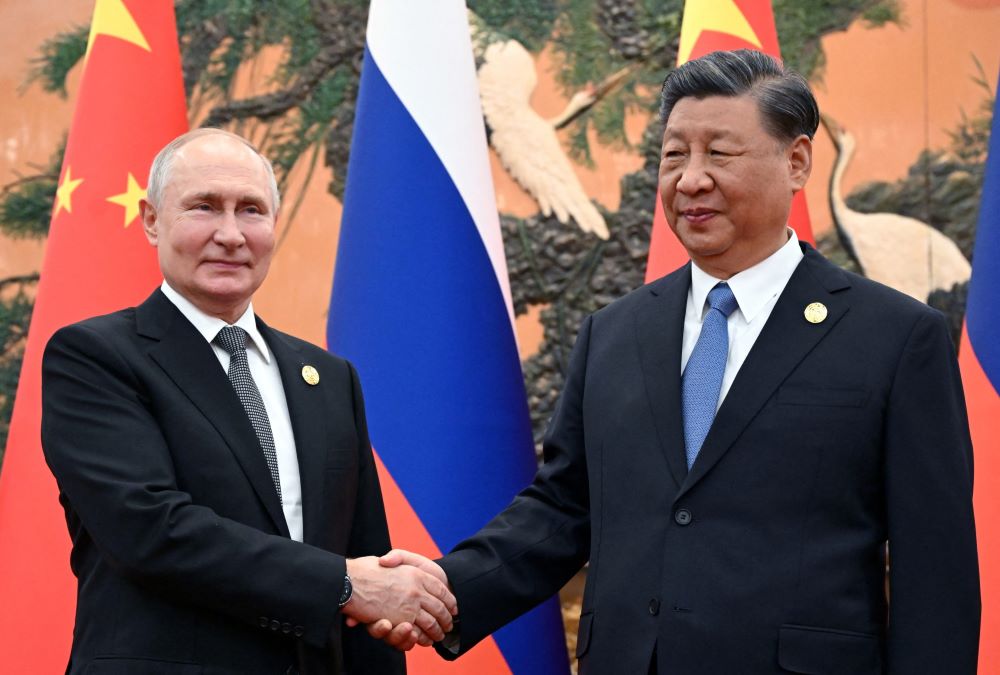
The report highlights that both China and Russia, permanent members of the UN Security Council, are closely monitoring Morocco’s progress in its southern provinces. It is deemed “highly likely” that both countries will soon announce their support for Morocco’s autonomy initiative—following in the footsteps of the United States, France, and the United Kingdom—a move that would mark a significant shift in international stance on the conflict.
These potential shifts, the report explains, come amid growing strategic and economic interests between Rabat and Beijing on one hand, and Washington on the other—particularly in clean energy and battery production. Morocco has become an international hub thanks to its control of 70% of the world’s phosphate reserves.
In this context, the report notes that Chinese energy giant CNGR announced a $2 billion investment after the COVID-19 pandemic to build a cathode plant in Morocco, aimed at supplying the U.S. and European markets. The company described the Kingdom as a “strategic territory” due to its geographic location and simplified administrative processes.
It also cites a partnership announced in September 2023 between South Korea’s LG Chem and China’s Huayou Cobalt to establish another cathode refining and production facility in Morocco. This move, the report adds, reflects growing interest in leveraging Morocco’s infrastructure and investor-friendly legal framework, in a context comparable to South America's lithium triangle.
The report further stresses Morocco’s economic strength in various sectors, particularly banking, which has grown into a cross-border financial force. Thanks to structural reforms since the 1990s, three Moroccan banks now rank among the top ten financial institutions in Africa, with total assets exceeding $90 billion and operations in 22 African countries.
On the geopolitical front, the report underlines that the U.S. recognition of Morocco’s sovereignty over the Sahara in 2020 marked a turning point. France followed suit in the summer of 2024, and the UK joined in May 2025. China and Russia remain the only permanent Security Council members yet to formally announce their positions—described in the report as still “in the process of being officially shaped.”
The report refers to Beijing and Moscow’s potential recognition as the “last diplomatic lock” within the Security Council, suggesting that once unlocked, it would significantly strengthen Morocco’s position and undermine the separatist narratives backed by Algeria.
In this regard, the report also mentions politically charged economic initiatives such as a proposal by Proparco—an arm of the French Development Agency—to help finance an electrical line between Dakhla and Casablanca, as well as the Morocco-Europe gas pipeline project. These are seen as signs that investment in the Sahara has become a strategic choice.
The report states, “When comparing Morocco with Algeria and Tunisia, it becomes clear that under the leadership of King Mohammed VI, the Kingdom offers a more secure and attractive environment for investment, along with a clearer framework for managing migration flows to Europe.”
Finally, the International Migration Research Institute emphasizes that the expected diplomatic developments in the coming months will be crucial in consolidating Morocco’s international position—especially if China and Russia officially endorse the autonomy plan as the final and realistic solution to the Sahara conflict under Moroccan sovereignty.