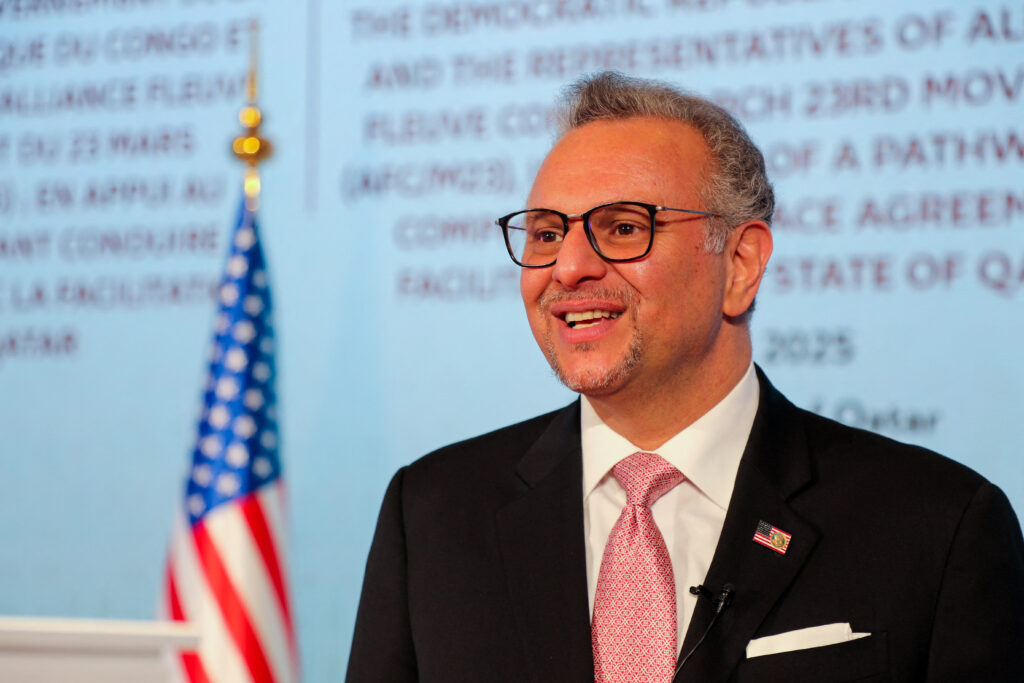
Masad Boulos, Senior Advisor to the U.S. President for African and Arab Affairs, said that Morocco and Algeria stand today before a historic opportunity to rebuild trust and open a new chapter in their bilateral relations, in a way that serves stability and development across the Maghreb region. He praised King Mohammed VI’s wisdom and calm leadership in managing regional issues.
In an interview with France 24 on Tuesday, Boulos said that during his recent visit to Algeria he sensed positive signs of openness from President Abdelmadjid Tebboune and his team toward dialogue with Rabat. He emphasized that the political will in both countries could revive the long-stalled Maghreb cooperation project, provided there is sincere intent and wise leadership on both sides.
Commenting on the latest UN Security Council resolution renewing MINURSO’s mandate, Boulos described the decision as “balanced and consensual,” noting that it satisfied all parties, with only minor formal reservations expressed on wording rather than substance. He said this positive atmosphere reflects growing international and regional momentum toward a lasting peaceful settlement of the Sahara issue.
Boulos affirmed that Washington considers Morocco’s Autonomy Plan the most realistic and flexible option among the proposed initiatives. He recalled that U.S. recognition of Morocco’s sovereignty over its southern provinces, established under President Donald Trump’s administration in 2020, remains in force and enjoys bipartisan support across U.S. institutions—illustrating the continuity and stability of the U.S.-Morocco strategic partnership.
He further revealed that Morocco’s Ministry of Foreign Affairs will soon present an updated version of the Autonomy Plan, based on the 2007 framework but adapted to reflect the political and developmental changes that have taken place in the southern provinces—particularly in Laayoune and Dakhla, where major projects have boosted the region’s economic and social dynamism.
The revised proposal, Boulos said, aims to provide a practical and comprehensive political solution that ensures stability and meets the aspirations of local populations without relying on traditional mechanisms such as a referendum, seeking instead a realistic political consensus under UN supervision.
He added that the upcoming negotiations will include Morocco, the Polisario Front, Algeria, and Mauritania, within a framework of direct, serious, and responsible dialogue. The United States, he stressed, supports all efforts to bridge differences and build lasting regional understanding.
Boulos concluded by affirming that North Africa’s stability begins with Morocco, noting that the United States will continue to support King Mohammed VI’s efforts to strengthen peace, unity, and development across the Maghreb. He underlined Washington’s conviction that regional security can only be achieved through genuine partnership and cooperation among neighboring countries.