A new report published by the American think tank Atlantic Council reveals that the United Arab Emirates is the most prominent and influential supporter of Morocco in the Western Sahara file, highlighting Abu Dhabi’s decisive role in the adoption of the latest UN Security Council resolution, which—for the first time—explicitly endorsed Morocco’s 2007 autonomy initiative as the framework for a solution.
According to the report, the UAE placed its full diplomatic weight behind the US-drafted resolution. It notes that the Emirati leadership conducted a series of high-level consultations with permanent members of the Security Council, including France and Russia, to ensure support for the American draft that emphasizes the “priority of the autonomy initiative.”
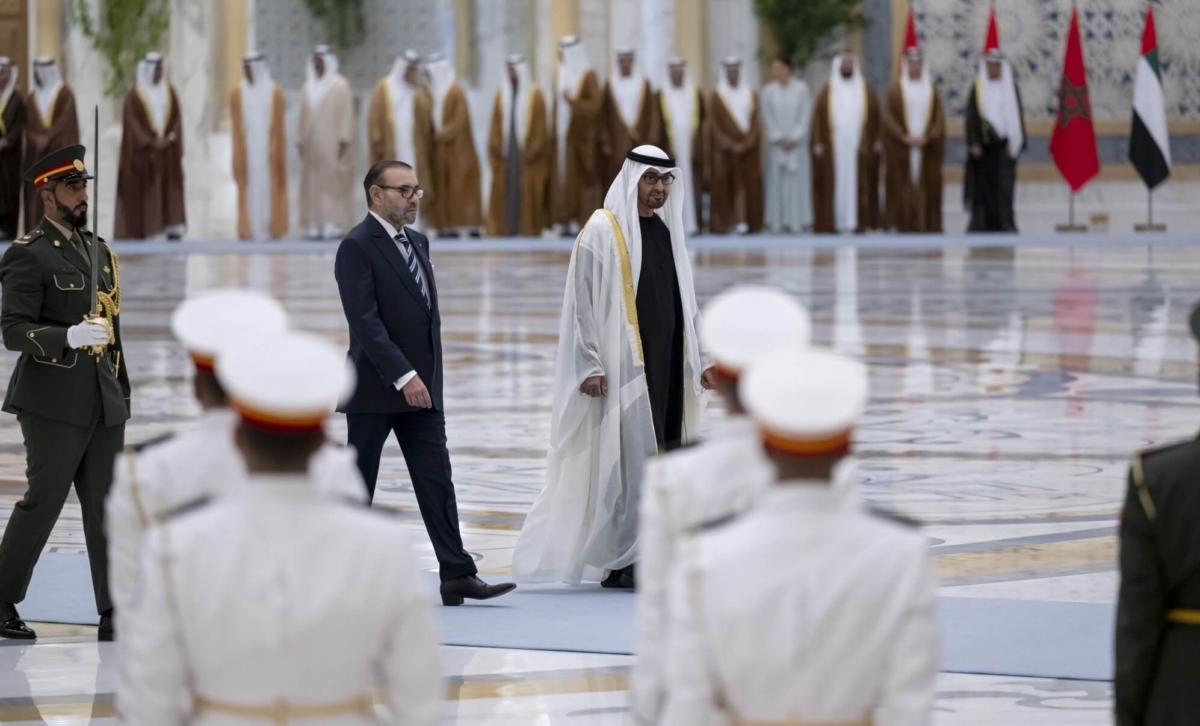
The report stresses that UAE support for Morocco is not circumstantial but stems from a long-standing strategic alliance, reinforced by an Emirati vision aimed at building a stable regional axis across North Africa and the Sahel. This alliance is also strengthened by personal and historical ties between the UAE President, Sheikh Mohammed bin Zayed Al Nahyan, and Morocco. The report recalls that Mohammed bin Zayed spent part of his youth in Morocco and even took part in the 1975 Green March at the age of fourteen alongside members of the Moroccan royal family.
The report further highlights that the UAE is today the largest political and economic supporter of Morocco in the southern provinces, having invested over 30 billion dollars in strategic projects. It also became the first Arab country to open a consulate in Laayoune in 2020, in a move widely interpreted as a concrete affirmation of its support for Morocco’s territorial integrity.
According to the Atlantic Council, the Emirati efforts at the Security Council are aligned with a new international trajectory led by Washington, which views the Moroccan autonomy initiative as the most “credible and realistic” solution, while ruling out alternatives described in the report as “no longer viable,” such as a referendum or partition.
Meanwhile, Algeria-aligned media reacted with tension ahead of the Security Council vote. The Algerian newspaper Echorouk, known for its alignment with the ruling establishment, claimed that France and the UAE exerted pressure on Security Council members to secure support for a resolution favorable to Morocco. The newspaper cited unspecified “sources” alleging heavy pressure but without providing any evidence or details.
The Security Council ultimately adopted Resolution 2797 on October 31, calling on the parties involved—Morocco, Algeria, Mauritania and the separatist Polisario Front—to engage in negotiations based on the Moroccan autonomy initiative submitted in 2007.
Observers describe the adoption of this resolution as a significant diplomatic victory for Morocco, as it establishes the autonomy plan as the leading basis for resolving the conflict while excluding the possibility of a referendum or secession—positions that have angered both Algeria and the Polisario.
Morocco has already begun preparing the detailed version of the autonomy plan, which it intends to present to the United Nations in the coming months, signaling its commitment to advancing the political process outlined by the latest UN resolution.