Morocco has overtaken South Africa to become Africa’s largest car producer in 2025, after reaching a record production level exceeding one million vehicles by December, opening a wide gap with South Africa, whose output stood at around 596,818 units.
According to Business Insider Africa, the figures confirm Morocco’s clear lead over South Africa this year, after the gap between the two countries had been relatively narrow in 2024. That year, Morocco produced about 559,645 vehicles compared to 515,976 in South Africa, making 2025 the first year in which Morocco decisively broke South Africa’s long-standing dominance in the automotive sector.
The same source reported that Morocco’s performance reflects the rapid acceleration of its automotive industry, with vehicle production rising by 79 percent in 2025 compared to 2024. By contrast, South Africa recorded a much more modest increase of 15.7 percent over the same period.
Business Insider noted that this growth highlights Morocco’s ability to leverage a supportive industrial environment and proactive government policies, alongside improved access to competitively priced and increasingly sustainable energy. South Africa, meanwhile, continues to rely on fossil fuels for around 80 to 85 percent of its electricity generation, a factor that has weighed on its industrial competitiveness.
The report added that Morocco’s production surge has strengthened its position as a prime destination for global automotive investment, notably through major manufacturing hubs operated by Renault and Stellantis. Morocco has also entered the electric vehicle segment, producing Opel’s Rocks-e since 2021, with fully locally developed electric model Dial-E expected to enter production in January 2026.
In contrast, South Africa has struggled to maintain its competitive edge, amid relatively stagnant production figures and persistent energy sector problems that have resulted in prolonged power cuts. These disruptions have affected industrial operations and driven up production costs for manufacturers.
South Africa’s automotive sector has also been impacted by growing trade and geopolitical tensions with the United States and Europe, according to the same source, adding uncertainty around exports despite these markets remaining the main destinations for vehicles produced in the country, including premium models.
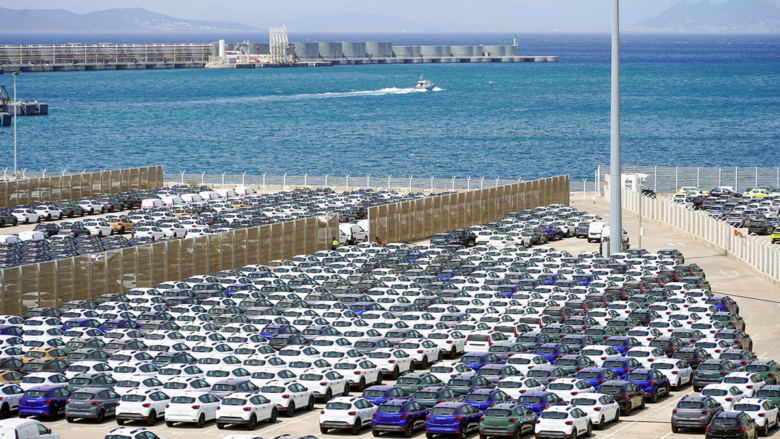
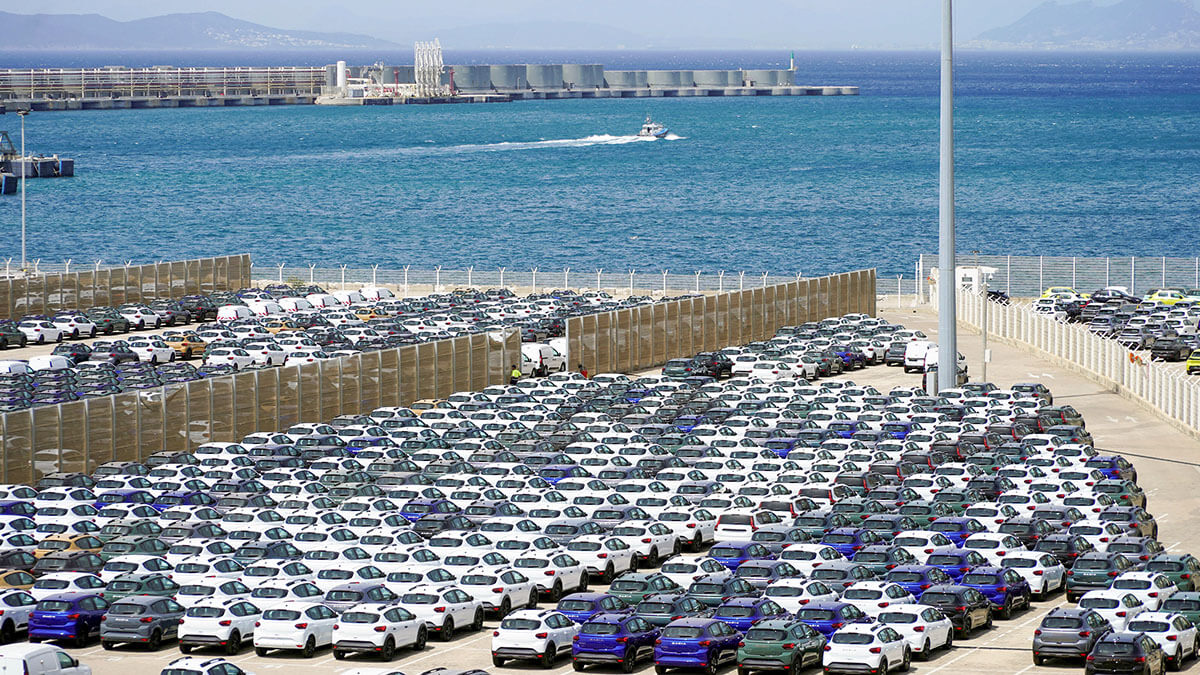
Over less than two decades, Morocco has transformed itself from a country with no domestic car manufacturing into one of Africa’s leading automotive production bases, driven by large-scale investments from global giants such as Renault and Stellantis, which established major plants in Tangier and Kenitra. This expansion has fostered a local supplier ecosystem of more than 270 companies specializing in automotive parts and components.
Morocco’s industrial policies have played a central role in this transformation, particularly through the 2014–2020 Industrial Acceleration Plan and the development of specialized industrial zones such as Tangier Automotive City, alongside tax incentives and free trade agreements with the European Union and the United States.
As a result of these investments and policy choices, Morocco’s automotive industry has seen strong growth in both production and exports, supplying hundreds of thousands of vehicles annually to European and global markets, while creating tens of thousands of jobs and deepening local supply chains.
Morocco’s ambitions extend beyond conventional vehicle manufacturing, with a growing focus on electric mobility, including electric car production and large-scale investments in EV battery projects, notably plans for global “gigafactories,” reinforcing the Kingdom’s position as an emerging regional hub for electric vehicle manufacturing.