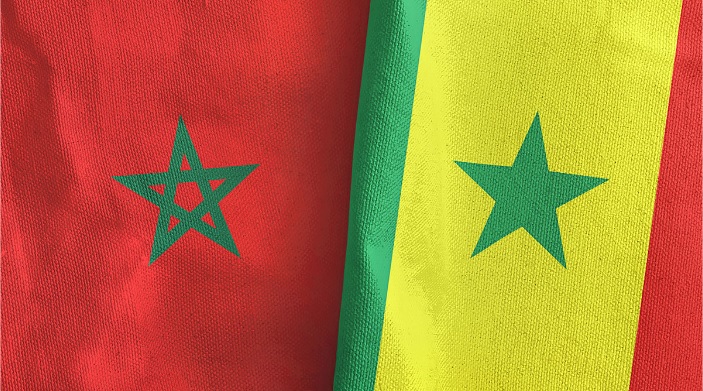
Rabat and Dakar have successfully blocked “cyber” attempts aimed at creating a Fabricated crisis between Morocco and Senegal, following the controversy surrounding the Africa Cup of Nations final. This was achieved through mutual reaffirmation of the strength of bilateral relations and continued political and institutional coordination between the two countries.
In this context, the Senegalese government, headed by Prime Minister Ousmane Sonko, is expected to visit Morocco next week on an official trip that reflects both countries’ commitment to strengthening their strategic partnership. The visit also signals that the temporary tensions surrounding the Africa Cup of Nations, particularly during the final, have not affected the depth of the relationship between the two nations.
A statement from the Moroccan government indicated that Prime Minister Aziz Akhannouch held a phone call with his Senegalese counterpart on Wednesday evening. During the call, the two officials agreed to hold the 15th session of the Morocco-Senegal High Joint Committee on January 26–27 in Rabat, as previously scheduled.
The statement added that the session will include, on its sidelines, the Moroccan-Senegalese Economic Forum, aimed at giving a new boost to economic and investment cooperation and translating the shared political will into concrete projects.
This development comes in the wake of significant controversy following the Africa Cup of Nations final, which included isolated incidents of unrest between Senegalese and Moroccan fans in Rabat, as well as scattered assaults targeting members of the Moroccan community in Senegal.
Despite the limited scope of these events, parties known for their hostility toward Morocco sought to exploit them politically and through the media, promoting the idea of a severe crisis between Rabat and Dakar in an attempt to undermine the historic ties between the two countries.
In this context, Algeria-aligned social media accounts, described as “electronic flies” or “cyber armies,” circulated edited videos and fake news aimed at fueling animosity and incitement between the peoples of Morocco and Senegal.
However, many observers noted that swift diplomatic action and direct communication between the two governments helped thwart these attempts. They confirmed that Morocco-Senegal relations are strong enough to withstand digital disinformation campaigns or temporary tensions arising from a sporting event.
Senegal remains one of Morocco’s closest African friends and allies, with decades-long ties based on South-South cooperation, political coordination, and deep religious and cultural bonds. Dakar has also been a clear supporter of Morocco’s sovereignty over its southern provinces and backs Morocco’s autonomy plan as a serious and credible solution to the Sahara dispute.