Morocco’s King Mohammed VI on Wednesday chaired a high-level meeting in Casablanca dedicated to the Nador West Med port and industrial complex, as Morocco prepares to launch operations at the facility in the last quarter of this year, according to a statement from the Royal Cabinet.
The project reflects Morocco’s broader strategy to further integrate its economy into global trade and value chains, by developing next-generation port infrastructure capable of competing with leading hubs in Europe and beyond. Officials explicitly frame Nador West Med as a continuation of the Tangier Med model, now Africa’s largest port and one of the Mediterranean’s key logistics gateways.
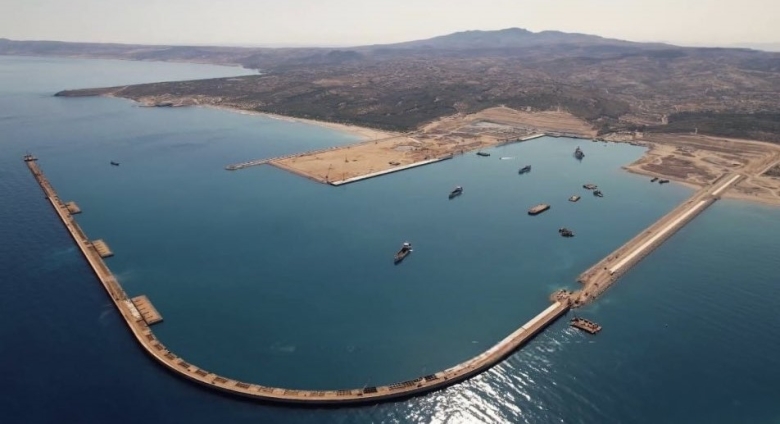
During the meeting, Fouad Brini, Chairman of Nador West Med, presented an update on construction progress, confirming that the project is designed as an integrated port, industrial, logistics, and energy platform. Public and private investments mobilized so far amount to 51 billion Moroccan dirhams (approximately $5.1 billion).
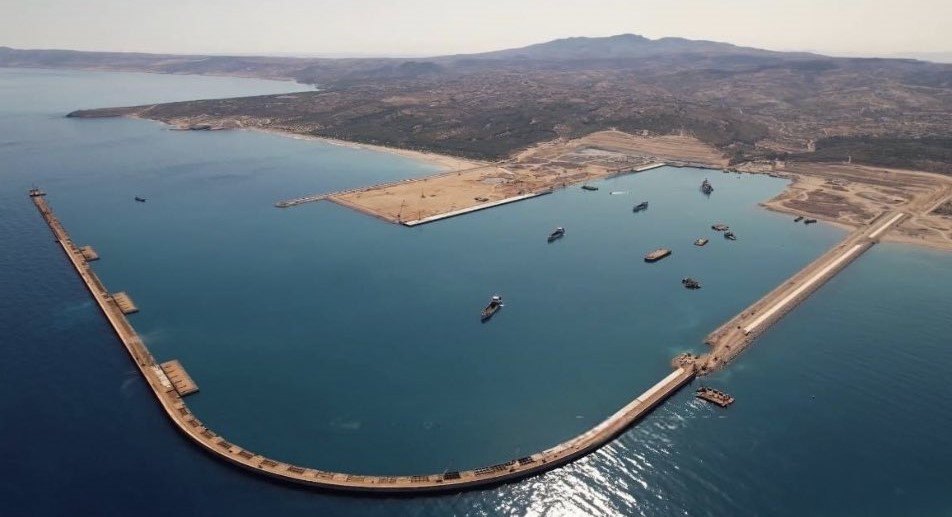
Core port infrastructure has already been completed, including 5.4 kilometers of breakwaters, 4 kilometers of quays, and four energy terminals. Two container terminal concession agreements have been signed, with operations scheduled to begin gradually from this year.
A key strategic component of the project is energy. Nador West Med will host Morocco’s first liquefied natural gas (LNG) terminal, with an annual capacity of 5 billion cubic meters, alongside a petroleum products terminal. This energy hub is expected to play a central role in strengthening Morocco’s energy security and supporting industrial development.
At launch, the port will have an annual capacity of 5 million containers and 35 million tonnes of liquid and solid bulk cargo. Long-term projections raise container capacity to 12 million TEUs, positioning Nador West Med as a major Mediterranean transshipment and industrial node.
The project also includes the development of 700 hectares of industrial and logistics zones in its first phase, where several international operators have already established a presence. Confirmed private investments currently stand at 20 billion dirhams (around $2 billion), underlining investor confidence in Morocco’s port-led growth strategy.
Following the presentation, King Mohammed VI instructed government stakeholders to ensure optimal conditions for the port’s launch, accelerate specialized workforce training, and prioritize local employment. He also stressed the need for surrounding regions to benefit from the project through urban development and multi-dimensional economic planning.