A report released on Wednesday by the Arab Center for Research and Policy Studies revealed that the failure of the Arab Maghreb Union and the stalled path of regional integration have pushed Morocco to adopt a broader African vision focused on expanding its influence in the African Sahel and the Atlantic Ocean, signing hundreds of agreements with countries across the continent.
The report noted that the deadlock plaguing the Arab Maghreb Union for years, due to deep-seated disputes between Morocco and Algeria over the Sahara issue, has compelled Rabat to seek alternative spaces for cooperation and alliances beyond the Maghreb framework.
It added that, while Algeria has chosen to look east within the Maghreb to build an alliance with Tunisia and Libya amid its declining influence in the African Sahel, Morocco has turned south towards Africa, leveraging its geostrategic position and historical ties with Sub-Saharan countries to strengthen its presence on the continent, capitalizing on its status as a gateway between Europe and Africa via the Mediterranean and the Atlantic.
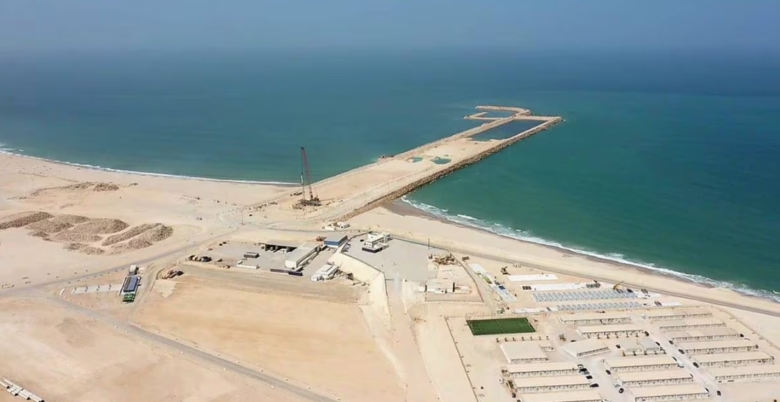
In this context, the report highlighted one of Morocco’s most prominent initiatives: the launch in November 2023 of the “Atlantic Initiative” to enable landlocked Sahel countries, such as Mali, Niger, Chad, and Burkina Faso, to access the Atlantic Ocean through Moroccan infrastructure, including the port of Dakhla in the Moroccan Sahara.
The report explained that this African vision is also part of a broader strategy that took shape after Morocco’s return to the African Union in 2017, built on four regional shifts, including the decline of French influence in the Sahel and the emergence of new partners such as Russia, China, and Gulf states.
According to the report, between 2000 and 2017, Morocco signed around 949 agreements with African countries, covering economic, cultural, and social fields, as part of an African strategy focused on the Sahel. These included infrastructure projects, military and security training, scholarships, imam training, and the promotion of African culture.
The report further stated that these partnerships constitute a key tool in Morocco’s foreign policy to secure diplomatic gains, particularly since the Atlantic projects, including the Port of Dakhla, fall within efforts to integrate the southern provinces into African and international trade networks, thereby reinforcing recognition of Morocco’s sovereignty over them.
The same source pointed out that about 20 African countries had opened consulates in the cities of Laayoune and Dakhla by April 2025, while recognition of the so-called “Sahrawi Republic” has declined, with several African nations withdrawing their recognition — Ghana being the most recent.
The report noted that Morocco’s projects in Africa are also a factor in escalating tensions with Algeria, especially amid competition in the fields of energy and infrastructure, such as the Morocco–Nigeria gas pipeline, which is considered an alternative to the Trans-Saharan Gas Pipeline through Algeria.
It further added that Morocco’s position among the top five African producers of renewable energy gives it additional leverage in regional competition and bolsters its ambitions for leadership in the Sahel and Atlantic space.
The report concluded that Morocco’s African vision is not merely an economic move but a strategic repositioning to fill part of the vacuum left by the withdrawal of French and European forces and the waning Algerian role in the Sahel.