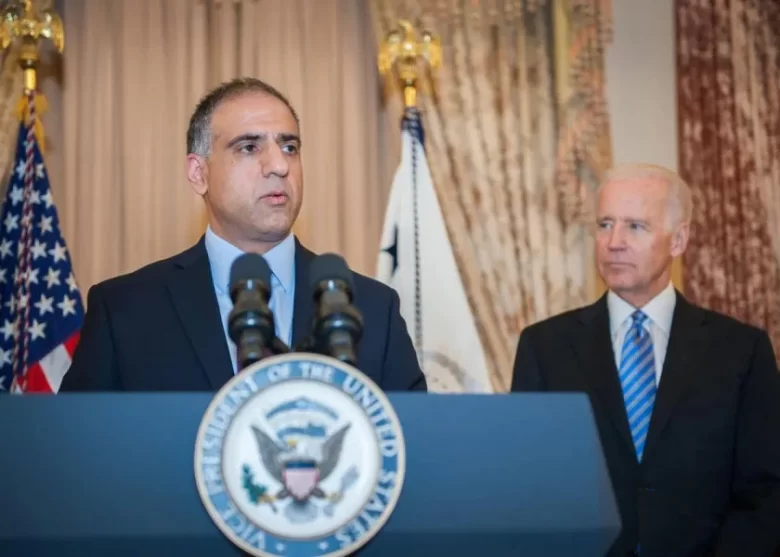
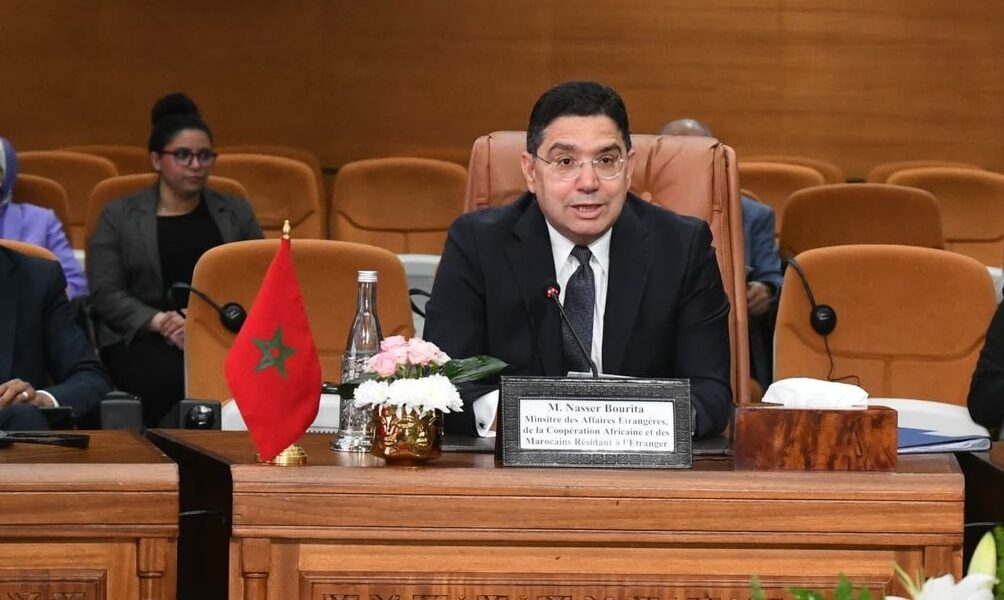
Nasser Bourita, Morocco’s Minister of Foreign Affairs, African Cooperation and Moroccan Expatriates, affirmed that the two-state solution is “the only option with no losers” — except for extremists on all sides, who “feed on the fire of conflict and can only survive in its shadow.” His remarks came during the opening session of the fifth meeting of the International Coalition for the Implementation of the Two-State Solution, held on Tuesday in Rabat in partnership between the Kingdom of Morocco and the Kingdom of the Netherlands.
Bourita explained that Morocco, based on its historical responsibility and its chairmanship of the Al-Quds Committee, views the two-state solution as the key to ensuring security and stability in the region. He stressed that this solution is “not an empty slogan, nor a cover for diplomatic posturing, but rather a moral commitment and a realistic political choice that cannot be postponed,” adding that war and violence have not led to peace, and that the time has come to translate this solution into a time-bound roadmap with clear and responsible steps.
The minister underscored that extremists — “those who trade in slogans and claim to support the Palestinian cause without offering anything of substance” — are the ones who stand to lose the most if this solution is implemented, as “they prefer the comfort of opposition over the responsibility of action.”
Bourita highlighted that Morocco has remained loyal to the two-state solution since the era of the late King Hassan II, continuing under King Mohammed VI, Chairman of the Al-Quds Committee, who leads a Moroccan diplomacy that “sometimes works in silence, but always with wisdom and effectiveness.”
In his address, Bourita stressed that exiting the current impasse requires halting military operations, stopping assaults in the West Bank, facilitating humanitarian aid, supporting UNRWA, and launching a comprehensive reconstruction plan under the supervision of the Palestinian Authority — citing the contents of the King’s speech at the recent Arab Summit.
The minister also outlined key elements of the coalition’s approach to implementing the two-state solution, emphasizing the importance of drawing inspiration from past successes, strengthening institutional support for the Palestinian National Authority, and embedding the economic dimension within the peace process. He noted that “a peace economy must serve as a tool for integration and a lever for coexistence,” but cautioned that it must not become a substitute for a political solution.
Bourita concluded by underscoring the significance of the "Compendium" document that Morocco and the Netherlands intend to present, praising the leadership of Saudi Arabia, Norway, and the European Union, and expressing support for the upcoming Saudi-French co-chairmanship of the New York Conference on the Two-State Solution.
He emphasized that holding this meeting amid the suffering in Palestinian territories — especially Gaza — is not merely a diplomatic gathering, but rather a message of hope and a concrete step toward reviving the two-state solution as the only path to a just and lasting peace in the region.