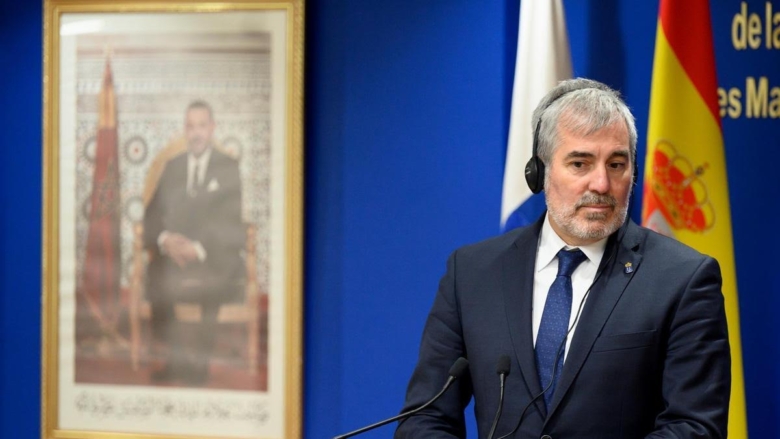
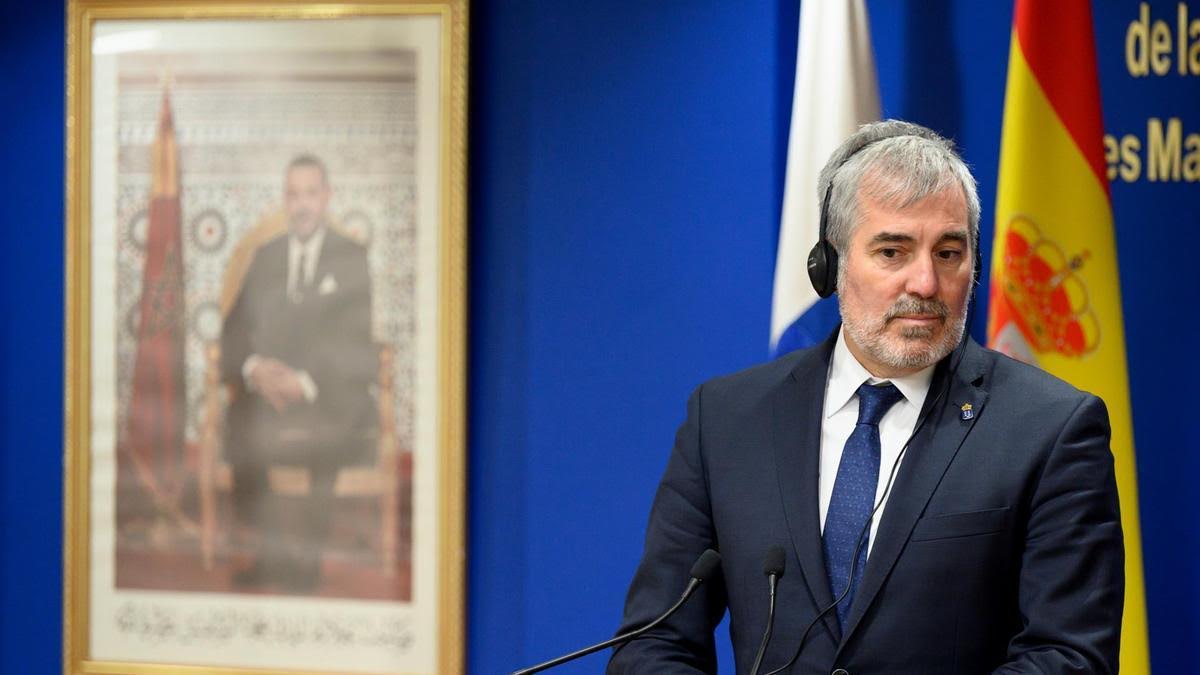
Fernando Clavijo, President of the Canary Islands’ regional government, said his third visit to Morocco reflects a firm conviction within his administration that the archipelago cannot afford to adopt an isolationist stance in a rapidly changing regional environment, warning that the political and economic cost of “isolation” would be high for the Canary Islands.
Speaking on Sunday upon his arrival in Agadir, ahead of the start of his official three-day working visit on Monday, Clavijo told Spain’s state news agency EFE that the Canary Islands must integrate into the economic momentum Morocco is currently experiencing, in order to “create wealth on both sides of the Atlantic” and strengthen opportunities for shared growth.
Clavijo noted that the visit, during which he is leading a delegation including representatives from the business, academic, and sports sectors, aims to consolidate “good-neighbourly relations” and build practical partnerships based on mutual interests. He stressed that the future of the Canary Islands is closely linked to the stability and progress of its regional environment.
“The better West Africa is doing, the better it is for us,” Clavijo said, according to EFE, pointing out that geographically the Canary Islands belong to West Africa. He warned that adopting a policy of withdrawal would be “harmful to the Canarian people,” adding that isolation in a globalised world is no longer a realistic or intelligent option given the interdependence of economic interests and cross-border production chains.
He added that the Canary Islands seek to play an active role in their regional surroundings, one in which they are able both to contribute and to learn, rather than remaining mere spectators of the economic transformations taking place nearby.
In this context, Clavijo underlined the need to adapt to ongoing geopolitical and economic changes, cautioning that failure to engage with these shifts could leave the archipelago in a position of weakness. He referred to the adage: “Either you are at the table, or you are on the menu.”
The President of the Canary Islands said his visit to Morocco will culminate in the signing of four agreements covering business, academic cooperation, and sports activities, as part of a shared desire to move bilateral relations from rhetoric to concrete projects.
He also pointed out that Morocco’s co-hosting of the 2030 FIFA World Cup opens new horizons for sports cooperation, noting that football federations from both sides are set to sign an agreement to develop joint activities leading up to the tournament.
On the academic front, Clavijo said the presidents of public universities in the Canary Islands will work to deepen scientific exchanges and strengthen mechanisms for mutual recognition of PhD students, in a way that serves research on both shores. Economically, he stressed the importance of enabling Canarian business leaders to keep pace with the growth of the Moroccan economy, within a partnership based on “equality and respect” and aimed at reinforcing mutual trust.
Regarding port activity, Clavijo argued in favour of complementarity rather than competition between Canary Islands ports and Moroccan ports, warning that direct competition would be detrimental to both sides. Cooperation, he said, offers broader development opportunities, particularly in strategic sectors such as water technologies and renewable energy, which he described as vital for addressing climate challenges and ensuring water and energy security.