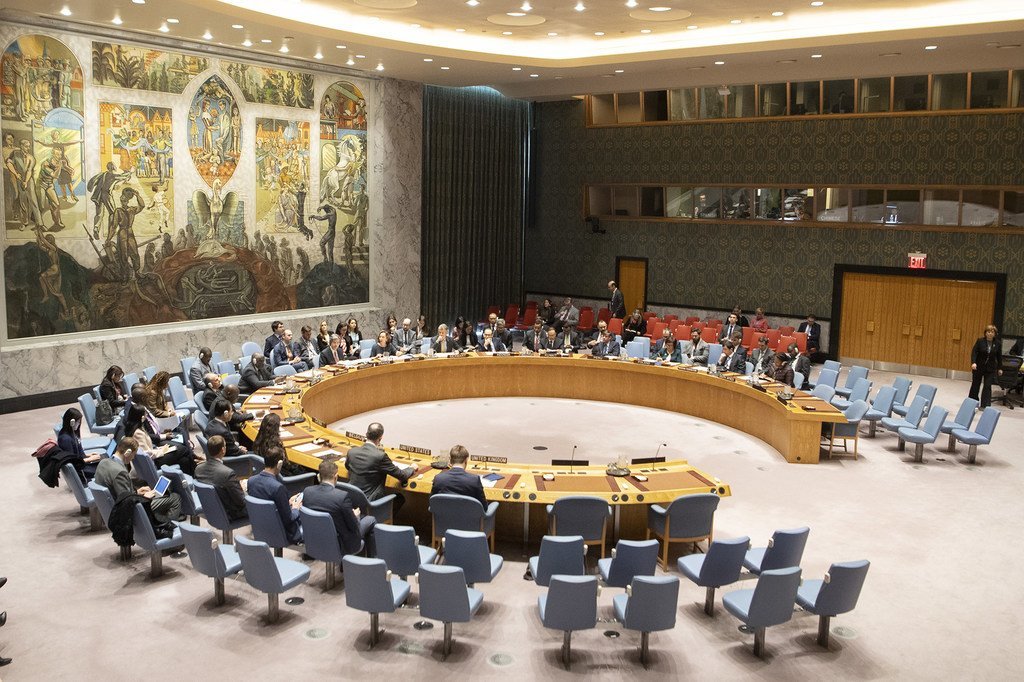
A broad wave of support swept across France following the adoption of the “historic” United Nations Security Council resolution on the Moroccan Sahara, with numerous French political, institutional, and economic figures praising what they described as a “major diplomatic victory” for Morocco and its Autonomy Plan.
Senator Christian Cambon, President of the France–Morocco Friendship Group in the Senate, hailed the decision as “a major advance for the Moroccan solution to the Sahara conflict,” emphasizing that the Security Council reaffirmed Morocco’s Autonomy Plan as the central framework for resolving the dispute. “France is committed to seeing this plan succeed, as it will bring peace,” he wrote on X.
In a similar tone, Hélène Laporte, Vice-President of the National Assembly and President of the France–Morocco Friendship Group in the Assembly, called the resolution “a major diplomatic step” that recognizes the Moroccan Autonomy Plan as “the main reference” for resolving the Sahara issue.
Far-right leader Marine Le Pen, head of the Rassemblement National, said the Security Council had recognized, by a large majority, Morocco’s Autonomy Plan, underlining that it “will therefore be implemented under Moroccan authority and sovereignty.” She hailed it as “a brilliant success.”
Deputy Bruno Fuchs described the resolution as “historic” and “a decisive advance” that sets “a clear framework for regional stability and development,” expressing France’s satisfaction with the outcome.
From the business world, Fabrice Le Saché, Vice-President of the French employers’ association MEDEF, also welcomed what he called “a major breakthrough,” praising Morocco’s sustained efforts and reaffirming the organization’s continued support for Morocco’s initiatives in its Southern Provinces.
Michaël Delafosse, Mayor of Montpellier, highlighted that the resolution “recognizes Morocco’s sovereignty over its Sahara,” describing it as “an important decision for international law.”
Political analyst Aymeric Chauprade stressed that “Morocco has convinced the multipolar world that the Moroccan identity of the Sahara is the only legitimate solution,” calling it “a historic day for Morocco, its King, its people, and its diplomacy.”
Former minister and deputy Nadia Hai affirmed that “the present and future of the Sahara now fall within Moroccan sovereignty,” congratulating His Majesty King Mohammed VI for his “constant and constructive dialogue” and emphasizing the importance of rebuilding trust and fostering durable peace in the Mediterranean region.
Deputy Hanane Mansouri, Vice-President of the France–Morocco Friendship Group in the National Assembly, described the resolution as “a major advance for diplomatic calm in the Maghreb.”
Former Secretary of State Othman Nasrou hailed the adoption of Resolution 2797 as “recognizing Morocco’s Autonomy Plan as the only realistic working basis,” calling it “a decisive and salutary step toward a lasting solution.”
Former deputy Pierre-Henri Dumont expressed pride in witnessing this “historic turning point,” noting that the UN recognized “the path of peace and realism traced by His Majesty King Mohammed VI,” describing it as “a major diplomatic victory for Morocco, peace, and regional stability.”
Prominent writer and philosopher Bernard-Henri Lévy declared that “the UN has made its decision on the Sahara,” calling it “a deserved victory for Morocco, for justice and common sense, and for the cause of freedom against obscurantism.” He concluded: “It is a great day.”
This wave of support was echoed by Bruno Retailleau, president of Les Républicains, and deputy Véronique Louwagie, both of whom praised Morocco’s political and diplomatic achievement.
Political analyst Frédéric Encel said the Security Council had confirmed “a decisive victory for common sense and historical legitimacy,” reaffirming that “the Sahara is an integral part of the Kingdom of Morocco.”
Geopolitics professor Emmanuel Dupuy emphasized that the resolution “unequivocally recognizes Morocco’s territorial integrity from Tangier to Lagouira,” adding that “the only basis for the Sahara’s institutional, economic, and social future is the Autonomy Plan proposed by Morocco since 2007.”
Deputy Michèle Tabarot called it “a major step toward consolidating Morocco’s sovereignty over its Sahara,” describing it as “a great diplomatic victory for His Majesty King Mohammed VI and the Moroccan people, marking a historic turning point for peace and regional stability.”
Deputy Corine Vignon, member of the Defense and Armed Forces Committee, said she was “happy and moved to see the UN recognize by a large majority the Moroccan Autonomy Plan.”
Valérie Pécresse, President of Île-de-France and former minister, described the UN recognition as “an important step for stability and cooperation in the Maghreb.”
Éric Ciotti, deputy from Nice and President of the Union des droites pour la République, also described it as “a historic diplomatic victory for Morocco and His Majesty King Mohammed VI.”
Finally, Estelle Youssouffa, deputy on the Foreign and European Affairs Committees, noted that the resolution represents “a major step toward peace in the Sahara with the Security Council’s support for the Moroccan Autonomy Plan,” while Senator Catherine Dumas, member of the Foreign Affairs, Defense, and Armed Forces Commission and the France–Morocco Friendship Group, described it as “a key step toward regional stability and lasting peace.”