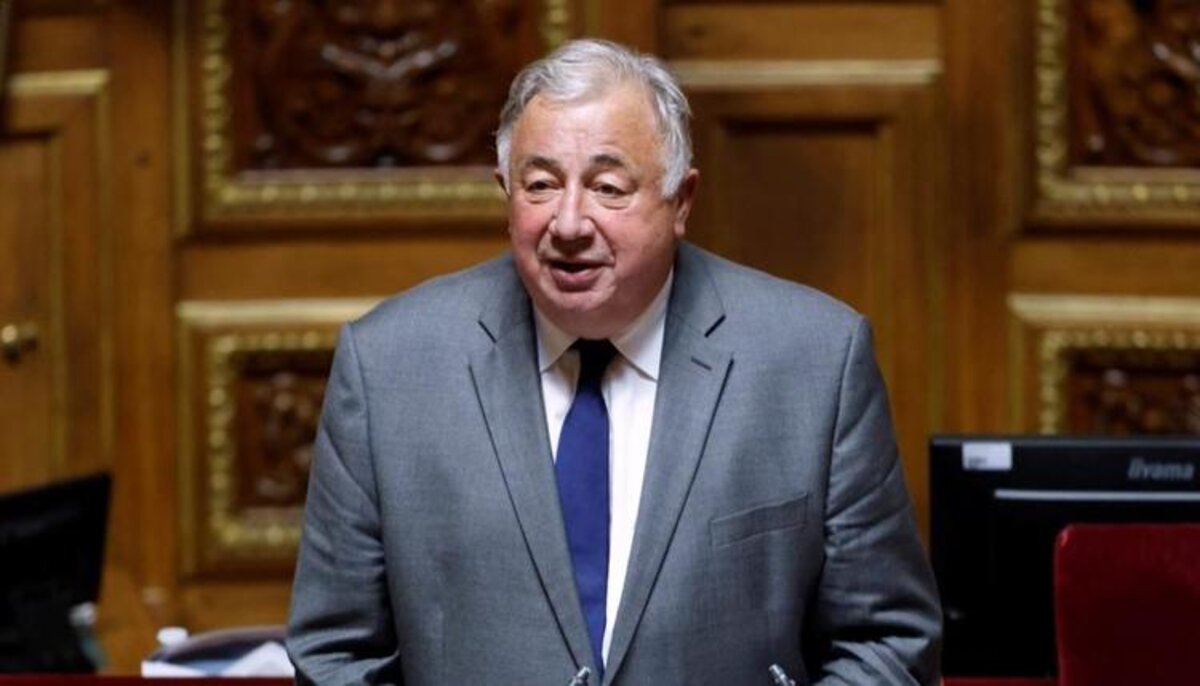
French Senate President Gérard Larcher is set to begin an official visit to Morocco on Sunday, lasting until February 26. His visit includes meetings with Moroccan officials and a trip to the southern provinces, all while completely disregarding any anticipated Algerian reactions—much like the recent visit of French Culture Minister Rachida Dati last week.
Larcher is accompanied by a high-level delegation, including Christian Cambon, president of the France-Morocco Friendship Group, Cédric Perrin, chairman of the Foreign Affairs Committee, as well as Hervé Marseille and Corinne Féret, vice presidents of the France-Morocco Friendship Group. This composition signals the significance Paris places on its bilateral ties with Rabat.
According to the itinerary seen by Assahifa, the French Senate President is expected to be received this afternoon at Rabat-Salé Airport by Mohamed Ould Rachid, president of Morocco’s House of Councillors. His first stop will be a meeting with representatives of the French community in Morocco.
The French delegation’s agenda also includes high-level meetings with top Moroccan officials. On Monday, Larcher will meet with the president of the House of Councillors, the vice president of the House of Representatives, Foreign Minister Nasser Bourita, and Prime Minister Aziz Akhannouch. The day’s schedule also includes a visit to the Mausoleum of Mohammed V in Rabat.
The most significant part of the visit is scheduled for Tuesday when Larcher and his delegation will travel to the Laayoune-Sakia El Hamra region in Morocco’s Sahara. This move reinforces France’s evolving position on Morocco’s sovereignty over the region and signals a shift toward deeper economic and political partnerships between Paris and Rabat.
During the visit, the French delegation will review several social and economic projects in Laayoune, including the new university hospital center and various infrastructure projects launched under the New Development Model for the southern provinces.
Larcher’s visit comes at a time of heightened tensions between Algeria and France, particularly following French Culture Minister Rachida Dati’s recent trip to Moroccan Sahara cities, which triggered widespread anger in Algeria. The Algerian Foreign Ministry labeled her visit as a "provocative move" in an official statement.
Despite Algeria’s repeated escalations, France has shown no hesitation in strengthening its ties with Morocco. Larcher’s visit serves as further confirmation that Paris is committed to deepening its cooperation with Rabat, regardless of external pressures.
The visit is expected to provoke further reactions from Algeria, which has consistently opposed any international initiatives reinforcing Morocco’s position on the Sahara issue—especially amid the shifting political dynamics in Moroccan-European relations in recent months.