North Africa is once again emerging as a key driver of economic growth across the continent, largely fueled by the strong performance of Morocco and Egypt, according to a new economic report by Global Finance magazine.
The report highlights that North Africa is expected to be the fastest-growing region in both Africa and the Arab world this year, despite economic disparities among its countries. Based on International Monetary Fund (IMF) projections, the combined growth rate for Mauritania, Morocco, Algeria, Tunisia, Egypt, and Libya is expected to reach around 4% in 2025, compared to 3.9% for the rest of Africa and 2% for the Middle East.
While the six North African countries have signed several agreements in recent years to boost intra-regional trade, Global Finance notes that chronic political tensions have limited the effectiveness of such efforts, preventing the region from forming a unified market despite its strong potential.
Egypt, the report adds, stands as North Africa’s largest market, with a population exceeding 110 million, half of whom are under the age of 30. After narrowly avoiding bankruptcy in 2024, Cairo is projected to achieve 3.8% growth this year. Although Egypt’s economy remains dependent on external aid and imports, it boasts a solid industrial base encompassing textiles, food production, and automotive manufacturing.
Morocco, meanwhile, is described as the “second economic pillar” of North Africa, thanks to decades of reforms that have stimulated private-sector growth and attracted foreign investment. The magazine notes that the Kingdom has become one of Africa’s most business-friendly destinations, hosting numerous multinational companies. Morocco’s economy is expected to grow by 3.9% in 2025 despite global headwinds.
In contrast, the economies of Algeria, Libya, and Mauritania remain heavily dependent on rents from natural resources. Global Finance points out that these countries remain relatively closed, relying primarily on oil, gas, or mineral revenues.
Tunisia, the report continues, is still mired in a deep financial and economic crisis, with the government yet to implement reforms required to secure IMF support. Growth in Tunisia is forecast to remain modest at around 1.4% this year.
The magazine further emphasizes the growing role of North African banks—particularly Moroccan and Egyptian institutions—in supporting cross-border economic activity, as companies from both countries expand into Sub-Saharan Africa. Meanwhile, major financial entities are increasingly focusing on digitalization and green transition projects.
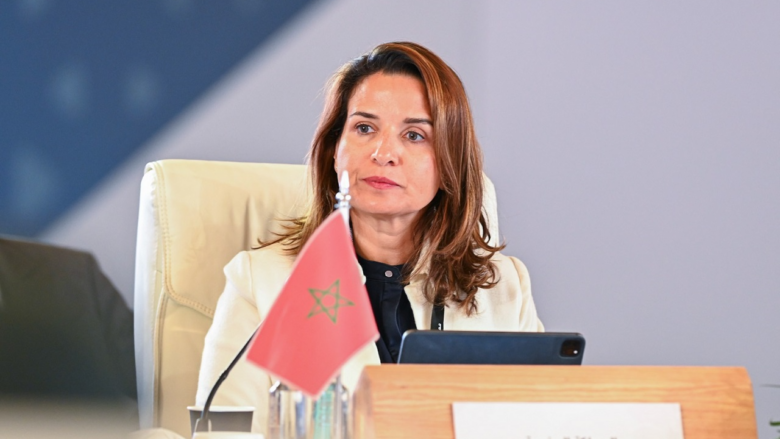
In Morocco, the Ministry of Economy and Finance recently reported an “exceptional” rise in foreign direct investment (FDI) inflows, which reached 39.3 billion dirhams by the end of August 2025—an impressive 43.4% increase year-on-year, according to Minister Nadia Fettah Alaoui’s statement before Parliament.
This marks one of the strongest surges in FDI in recent years, particularly amid global financial volatility and market uncertainty, signaling that Morocco continues to maintain its appeal to international investors.
Economists attribute the country’s sustained economic performance to its political stability and clear strategic vision, especially in attracting investment in advanced industries, renewable energy, automotive and aerospace manufacturing, and defense.
This positive momentum coincides with the recent decision by U.S. credit rating agency Standard & Poor’s (S&P) to upgrade Morocco’s sovereign debt rating back to “Investment Grade”—a status the Kingdom had lost in 2021 due to the economic fallout from the COVID-19 pandemic.
In its assessment following a review mission to Morocco in September, S&P cited improving economic indicators and ongoing reforms, praising the resilience of the Moroccan economy in the face of global challenges.
Restoring the Investment Grade rating is expected to facilitate Morocco’s access to international financial markets under more favorable conditions, lower borrowing costs, and strengthen investor confidence in the country’s fiscal and institutional stability.
Experts believe that this development will directly encourage new waves of foreign investment—particularly from sovereign wealth funds and global institutions that require an investment-grade classification before committing capital to a market.