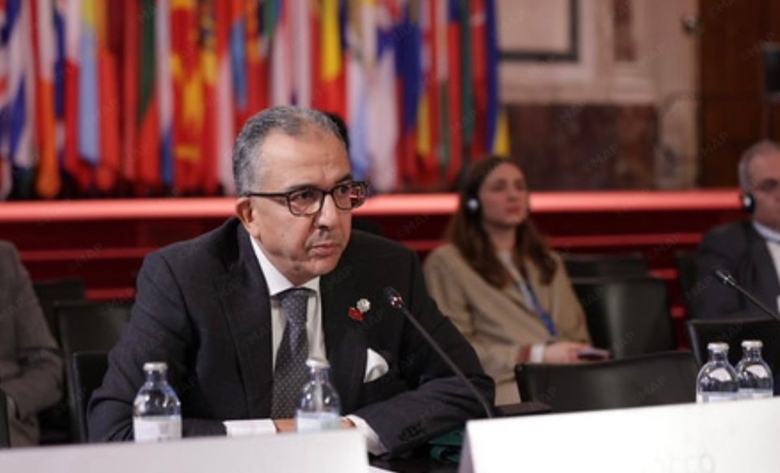
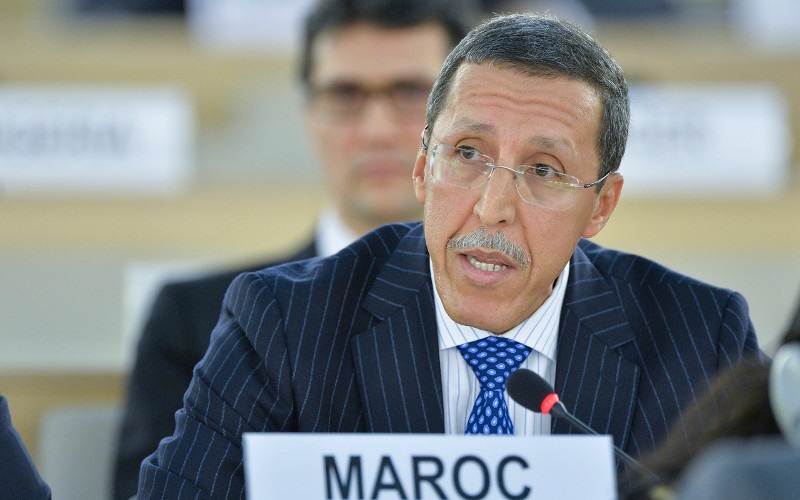
Morocco’s Permanent Representative to the United Nations, Ambassador Omar Hilale, has delivered a strong yet measured response to comments made by Algerian Foreign Minister Ahmed Attaf on the issue of the Moroccan Sahara during the general debate of the 80th session of the United Nations General Assembly.
Hilale said his intervention aimed to “provide clarifications and reestablish truths,” responding point by point “without controversy or animosity” to what he described as inaccuracies in Attaf’s address.
The Ambassador recalled that it was Morocco itself that placed the Sahara issue on the General Assembly’s agenda as a decolonization matter 62 years ago. “History is stubborn. History will remember that it was Morocco that put the Sahara issue on the agenda, thanks to its demands since 1956,” he stressed.
Hilale expressed regret that the Algerian minister failed to acknowledge a key resolution of the General Assembly, which took note of the Madrid Accords. “In this room, fifty years ago, resolution 3458B was adopted, putting an end to Spanish colonization of our Southern Provinces,” he stated.
Responding to the description of the Sahara as a “decolonization issue,” the Moroccan diplomat underlined that the Security Council treats the matter within the framework of peace and security, as part of the settlement of disputes. He noted that MINURSO was created 34 years ago, but emphasized that the Council has, for 21 years, adopted resolutions calling for a political solution.
“Since 2007, the Security Council has adopted resolutions every year that enshrine the preeminence of the Moroccan Autonomy Initiative, which it considers serious and credible,” Hilale pointed out.
Addressing Algeria’s claims of “imposed realities,” Hilale highlighted the socio-economic development of Morocco’s southern provinces, noting billions of dollars in investments, major infrastructure projects including Africa’s longest bridge and a deep-water port, as well as universities and hospitals.
“The realities of the Moroccan Sahara today are peace, stability, and development,” he said, adding that the population actively participates in all political, cultural, and economic life. He also pointed to the opening of 30 Consulates General in Laayoune and Dakhla as concrete recognition of Moroccan sovereignty.
Hilale underscored Morocco’s international partnerships, citing U.S. encouragement for agencies and companies to invest in the Sahara. He said this further reflects growing global engagement in the region.
He also drew attention to what he called Algeria’s contradictions. “Algeria claims not to be a stakeholder, but it sets conditions and defines fundamentals for the resolution of this dispute. By what right does it do so, if not as a stakeholder?” Hilale asked.
The Moroccan diplomat urged Algiers to engage constructively in the UN political process, including roundtable discussions, to help resolve a dispute that has lasted far too long.
Hilale also reaffirmed the wide international support for Morocco’s Autonomy Initiative. He said more than 120 countries, including three permanent Security Council members and over two-thirds of EU members, back the plan as the only solution. Dozens of others explicitly recognize the Moroccan sovereignty over the Sahara.
In closing, Hilale referred to King Mohammed VI’s Throne Speech delivered on July 29, 2025, quoting the Monarch’s call for a consensual solution: “As proud as I am of these stances, which uphold right and legitimacy, I keenly look forward to finding a solution with neither winner nor loser; a face-saving solution for all parties.”