
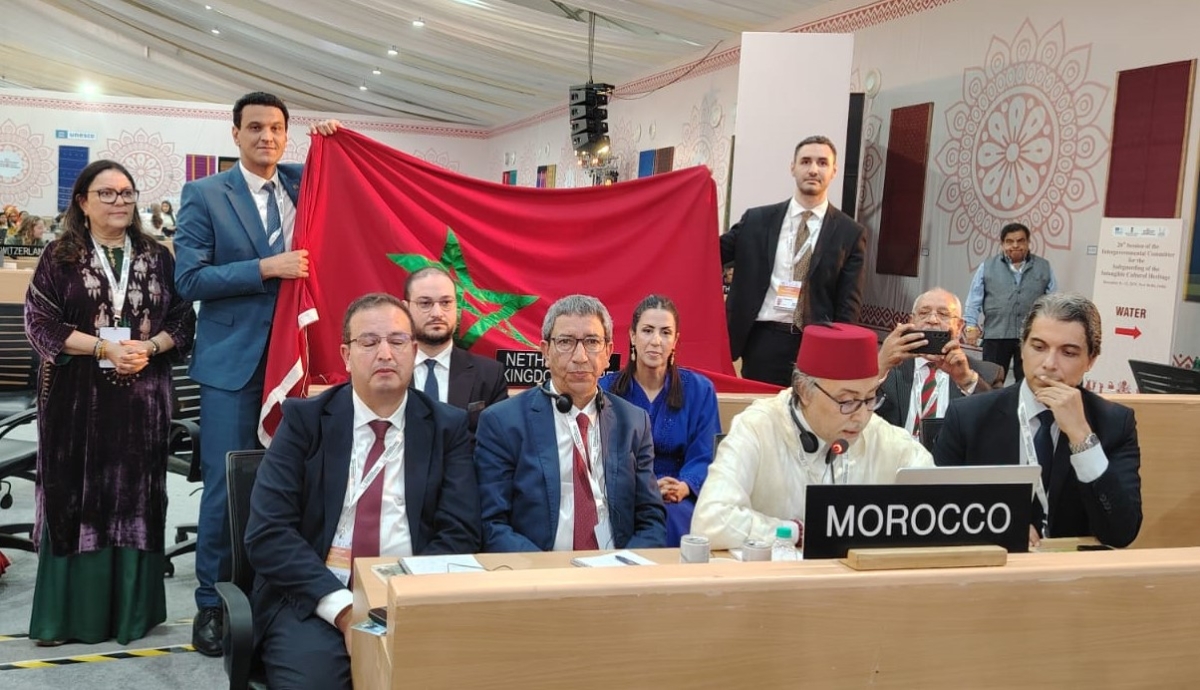
The Moroccan caftan was officially added on Wednesday in New Delhi to UNESCO’s List of the Intangible Cultural Heritage of Humanity during the 20th session of the Intergovernmental Committee for the Safeguarding of the Intangible Cultural Heritage.
The inscription is seen as international recognition of Morocco’s artistic creativity and centuries-old craftsmanship, highlighting the Kingdom’s capacity to preserve, promote, and transmit its cultural traditions across generations.
The recognition also reflects Morocco’s sustained efforts, under the leadership of King Mohammed VI, to safeguard and enhance its rich cultural heritage, placing traditional know-how at the heart of national cultural policy.
Considered a cornerstone of Morocco’s cultural tapestry, the caftan stands out for its historical depth and strong social symbolism, combining refined craftsmanship with everyday cultural practices rooted in centuries of tradition.
Beyond its aesthetic value, the caftan is regarded as a symbol of national identity, social cohesion, and Morocco’s regional and cultural diversity, involving communities at every stage of its design, production, and use.