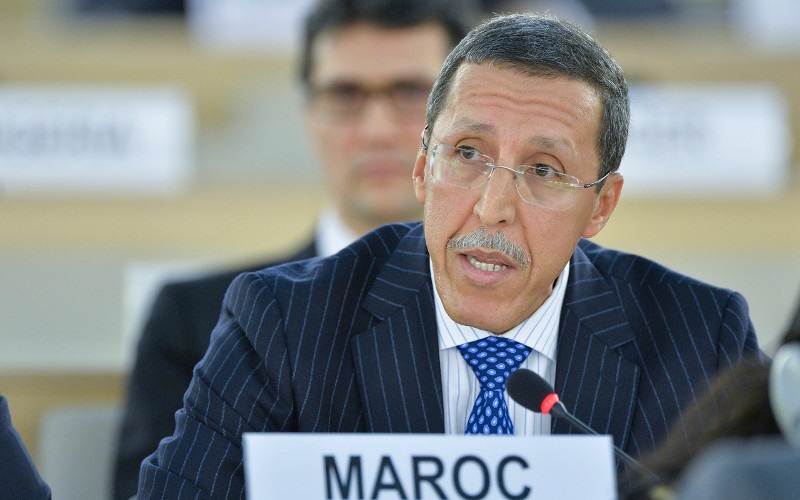
Morocco’s diplomacy under King Mohammed VI is shaped by a philosophy grounded in “action,” “concrete results,” and a long-standing commitment to shared progress, the country’s ambassador to the United Nations, Omar Hilale, said on Saturday in Dakhla.
Speaking at the 5th MD Sahara Forum, held under the theme “The Atlantic Sahara, a corridor for opening up and connectivity between two continents,” Hilale said Morocco’s foreign policy reflects “an unshakeable conviction that the greatness of nations is measured by their ability to forge their future together.”
Hilale described the approach as one centred on trust, cooperation and sustainability, rather than isolation or opportunism. He said the Kingdom’s diplomatic doctrine draws from its millennia-old heritage and the historical dialogue linking the Atlantic, the Sahara, the Maghreb, Saharan Africa and Europe.
The 50th anniversary of the Green March, he added, provides an opportunity to reflect on Morocco’s diplomatic trajectory—one based on historical legitimacy, national unity and a positive, outward-looking approach.
The ambassador tied Morocco’s strategy to the three founding pillars of the UN Charter: development, human rights, and peace and security. On development, he argued that the country views inclusive growth as central to stability at home and cooperation abroad.
He pointed to investment in renewable energy, infrastructure modernisation and economic openness as pillars of a forward-looking national project. Diplomacy, he said, functions as a “strategic lever” for delivering these goals, particularly through partnerships with African and developing countries.
Human rights, enshrined in the 2011 Constitution, form another central pillar of Morocco’s diplomatic practice, Hilale said. He cited humanitarian action, institutional cooperation, knowledge-sharing and interfaith dialogue as examples of the Kingdom’s multidimensional engagement, especially across Africa.
Morocco’s ability to translate domestic reforms into international initiatives, he argued, reflects an “ethic of coherence” between principles and practice.
On peace and security, Hilale said Morocco adopts a comprehensive approach that views terrorism, trafficking, conflict, humanitarian crises and environmental degradation as interconnected challenges requiring integrated solutions.
He noted that Morocco is seeking the presidency of the UN Peacebuilding Commission from January, aiming to bring “an authentic African perspective” to the body’s work and ensure the continent’s priorities are more accurately represented.
Morocco’s engagement at the UN Security Council, he said, also reflects this commitment, highlighting the country’s role in elevating African concerns with “a voice grounded in lived experience and concrete action.”
Hilale concluded by underscoring the consistency of Morocco’s diplomatic approach. The 50th anniversary of the Green March, coupled with the recent adoption of UN Security Council Resolution 2797, illustrated, he said, the Kingdom’s capacity to anticipate, unify and act.