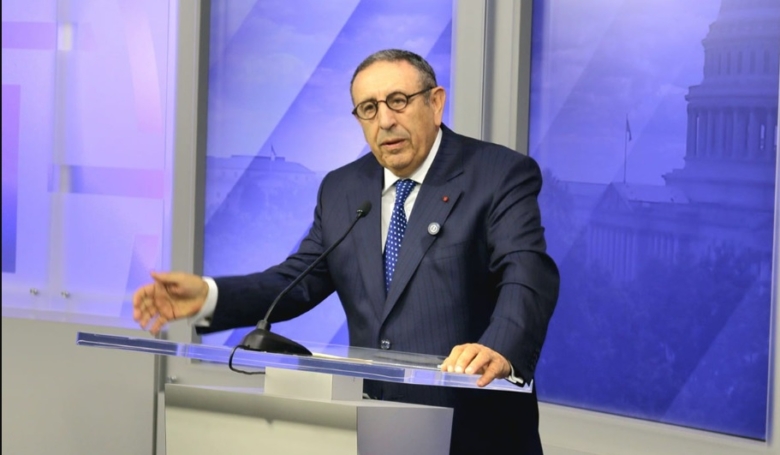
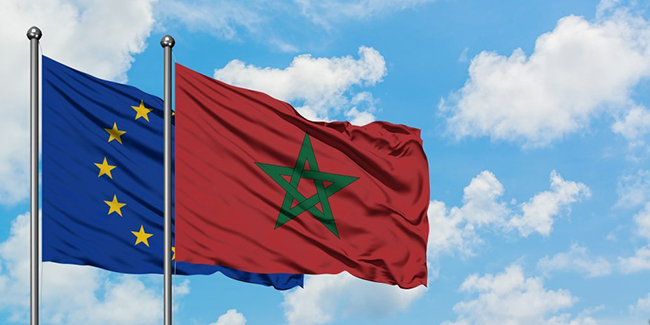
The Kingdom of Morocco and the European Union have successfully concluded negotiations on amending their agricultural agreement, Minister of Foreign Affairs, African Cooperation, and Moroccan Expatriates Nasser Bourita announced Thursday in Rabat.
Speaking at a press briefing, Bourita said the signing ceremony will take place “shortly in Brussels” and, pending the completion of internal procedures, the agreement will be provisionally implemented as soon as it is signed.
The minister underlined that the new text provides “the necessary clarifications in accordance with the Kingdom's national fundamentals,” while remaining consistent with the framework established under the 2018 exchange of letters between Rabat and Brussels.
A key element of the agreement, Bourita stressed, is the confirmation that preferential tariffs granted by the EU under the Association Agreement with Morocco will continue to apply to products originating from the Southern Provinces. He explained that market access conditions for agricultural products from the Moroccan Sahara will be the same as those from the north of the country.
The revised text also introduces technical measures regarding product labeling, with goods from the regions of Laayoune-Sakia El Hamra and Dakhla-Oued Eddahab to carry origin identifiers.
Bourita noted that the agreement recalls the EU’s 2019 stance on the Moroccan Sahara, when the Union positively acknowledged Morocco’s serious and credible efforts toward resolving the dispute. It also refers to the positions later adopted by several EU Member States, which publicly backed Morocco’s autonomy initiative in line with the vision of King Mohammed VI.
“This is not a political agreement,” Bourita clarified. “It is a sectoral, commercial, and operational agreement. Nonetheless, it sends strong and clear signals.”
He highlighted that, under the King’s leadership, the Moroccan Sahara has become “a zone of development, connectivity, and prosperity” and an emerging hub for regional stability and growth. He pointed to recent expressions of international interest, citing the United States’ statement last week, the upcoming Morocco-France Economic Forum in Dakhla on October 9, and initiatives by the UK Export Finance agency.
Domestically, the agreement is expected to strengthen agricultural GDP and boost job creation, particularly in the Southern regions. At the broader level, Bourita stressed that it reinforces Morocco’s longstanding partnership with the EU, with bilateral trade exceeding €60 billion annually across industrial, agricultural, and equipment sectors.
The minister emphasized that King Mohammed VI has consistently sought to anchor Morocco-EU relations in “joint and concrete actions,” extending beyond trade to political, social, environmental, migration, security, digital, and cultural cooperation.
“At a time of complex regional dynamics and structural crises, this progress allows Morocco and the EU to look to the future with confidence and ambition,” Bourita concluded, calling for deeper frameworks such as revitalizing the Association Council and laying foundations for a reinforced strategic partnership in the years ahead.