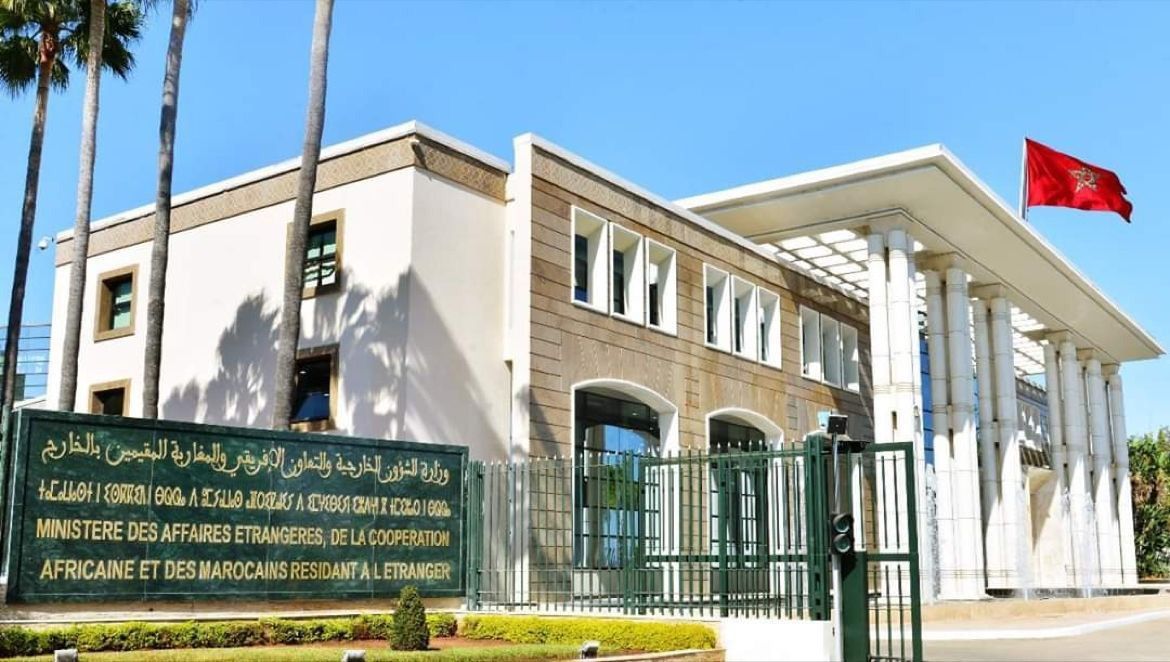
The Moroccan Ministry of Foreign Affairs has announced the activation of a crisis unit at the ministry’s headquarters in Rabat, as well as another at the Kingdom’s General Consulate in Tripoli, in order to monitor the evolving security situation in Libya amid ongoing tensions in the country.
In an official statement, the ministry affirmed that it is closely monitoring the conditions of the Moroccan community residing in Libya, urging all nationals to exercise the utmost caution, remain in their homes, and avoid areas of conflict or gatherings that could pose risks to their safety.
According to the same statement, reviewed by Assahifa, dedicated phone lines have been made available for members of the Moroccan community to enable direct communication with the competent authorities, whether at the central administration or the consulate in Tripoli, to ensure rapid response in case of emergency.
This Moroccan move comes in parallel with growing regional and international concern over the situation in Libya. On Sunday, Egyptian President Abdel Fattah el-Sisi, during a meeting with U.S. President Joe Biden’s Senior Adviser for Middle East and North Africa Affairs, Masad Boulos, stressed the need to restore stability within Libyan territory.
According to international reports, President Sisi reiterated Egypt’s support for any political settlement efforts aimed at establishing a credible and unified government, backed by Libya’s official institutions, with the primary goal of preparing for simultaneous presidential and parliamentary elections—an approach that Rabat has also previously endorsed.
Libya is currently witnessing an escalating security crisis following the killing of Abdulghani al-Kikli, widely known as “Ghaniwa,” a prominent commander of the Stabilization Support Apparatus (SSA), by armed factions aligned with the Government of National Unity led by Abdulhamid al-Dbeibah. The clashes have so far left at least eight civilians dead, according to the United Nations, while a ceasefire announced shortly after remains in effect.
In a televised speech on Saturday, Prime Minister Dbeibah described the dismantling of militias as an “ongoing project,” stating that his government would not tolerate corruption or extortion and aims to build a Libya free of militias. His media office released a video showing him greeting security forces in front of the Prime Ministry building and receiving delegations of Tripoli elders to discuss what he called a “successful security operation” in the Abu Salim district, formerly an SSA stronghold.
In the same context, the United Nations Support Mission in Libya expressed concern over the recent spike in violence, urging all parties to protect civilians and public property. The Libyan Interior Ministry also revealed that nine decomposed bodies were found in a morgue refrigerator at Al-Khadra Hospital in Abu Salim, which were never reported by the SSA that previously controlled the area.