Morocco’s Ambassador to the United States, Youssef Amrani, said that bilateral relations between Rabat and Washington have reached unprecedented strength in recent years, particularly during the tenure of U.S. President Donald Trump, who—according to Amrani—elevated the partnership to its “highest level” and helped generate new international momentum in support of Morocco’s autonomy plan for the Sahara.
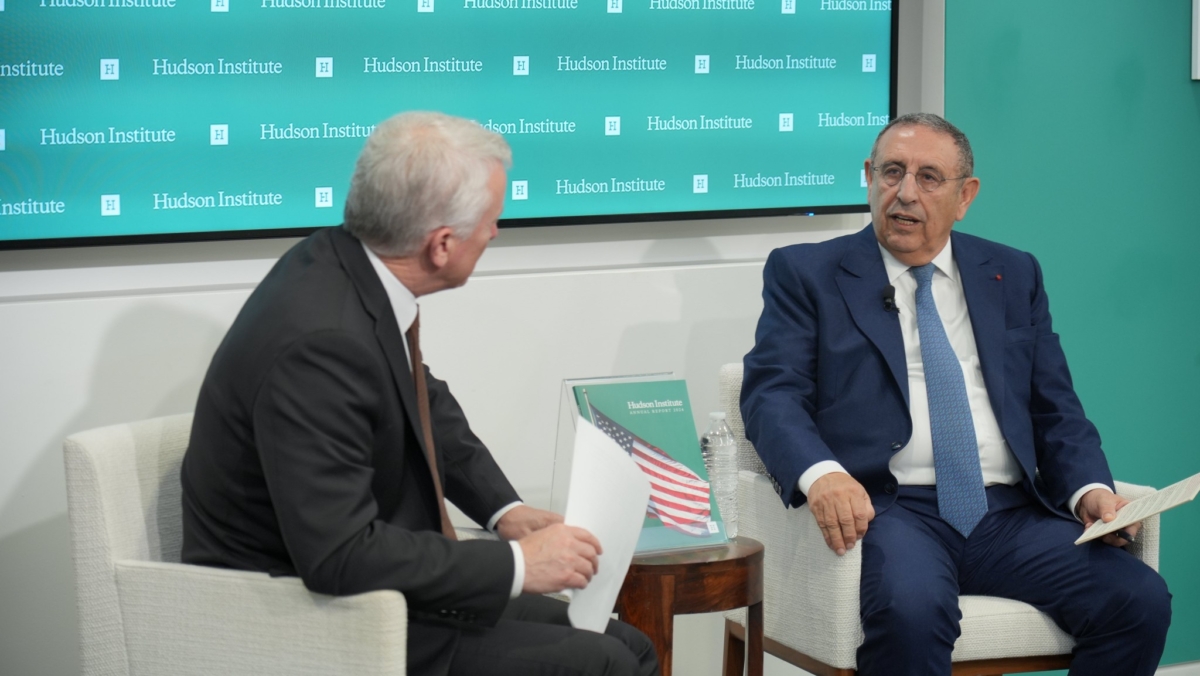
In an interview with the Hudson Institute published Monday on the think tank’s official YouTube channel, Amrani said the U.S. decision in 2020 to recognize Morocco’s sovereignty over the Sahara marked a “turning point” in the political process, opening the door to expanded international backing. This, he noted, included renewed support from France, the United Kingdom, and Spain, and ultimately paved the way for the UN Security Council to adopt the autonomy initiative as a realistic, viable, and lasting solution.
The ambassador stressed that this progress would not have been possible without the “clear vision and continuous leadership” of King Mohammed VI. He added that Morocco today possesses a solid political platform and firm determination to implement the autonomy plan, especially after the Security Council voted overwhelmingly in its favor.
Amrani underscored that Morocco remains a trusted partner for the United States due to its ability to translate policy into concrete results across stability, economic development, and counter-extremism—factors that, he said, define the strategic nature of the bilateral partnership in North Africa and the Middle East.
The ambassador emphasized that Africa remains a strategic priority for Morocco, given the continent’s expected demographic and economic growth. He noted that Europe’s diminishing role in the Sahel further reinforces the importance of the U.S.–Morocco partnership in security, stability, and development.
Morocco, he said, has developed significant expertise and tools to counter violent extremism. He stressed that Islam is not a religion of hatred and highlighted Morocco’s role in dismantling extremist narratives through the training of African imams and educational programs aligned with universal values, contributing to regional stability.
Amrani said Morocco is not simply managing crises but actively creating economic opportunities through transformative projects such as Tanger Med Port and the Nigeria–Morocco Gas Pipeline. These initiatives, he explained, aim to strengthen connections between North and West Africa and link the continent more closely with Europe, providing essential energy and resources to support growth.
He highlighted Morocco’s rising role in infrastructure, industry, and agriculture, pinpointing the Kingdom’s emergence as a major player in the automotive, aerospace, and clean-energy sectors. This progress has positioned Morocco as a key investment hub in Africa and strengthened its credibility as a reliable economic partner.
Amrani also praised the contribution of the private sector, citing investment by Moroccan banks, telecommunications companies, and water-management firms across West Africa. Such engagement, he said, reflects Morocco’s ability to integrate its economy with its regional environment and deepen partnerships with African states.
Education and training, he added, form a core pillar of Morocco’s African policy. Thousands of African students study in Moroccan universities, returning home with technical and academic expertise. He emphasized that human capital and specialized skills remain essential components for Africa’s long-term stability and development.
Addressing regional tensions with Algeria, Amrani recalled that following the most recent UN Security Council resolution, King Mohammed VI reiterated his call to Algeria and its president to turn the page and work together on the basis of shared values.
“In the end, we speak the same language; we are all Muslims. We must build something cohesive. We cannot live without regional integration,” Amrani said.
He noted that achieving this vision is possible “if there is strong political will,” but said that, so far, Algeria has not responded. The King’s message, he added, also extended to the Sahrawis in the Tindouf camps, affirming that Morocco’s doors remain open should they wish to return and participate in nation-building.
“Our region does not need more borders—we need greater connectivity,” Amrani said, stressing that combining the region’s resources and human capital would allow North Africa to move forward significantly.