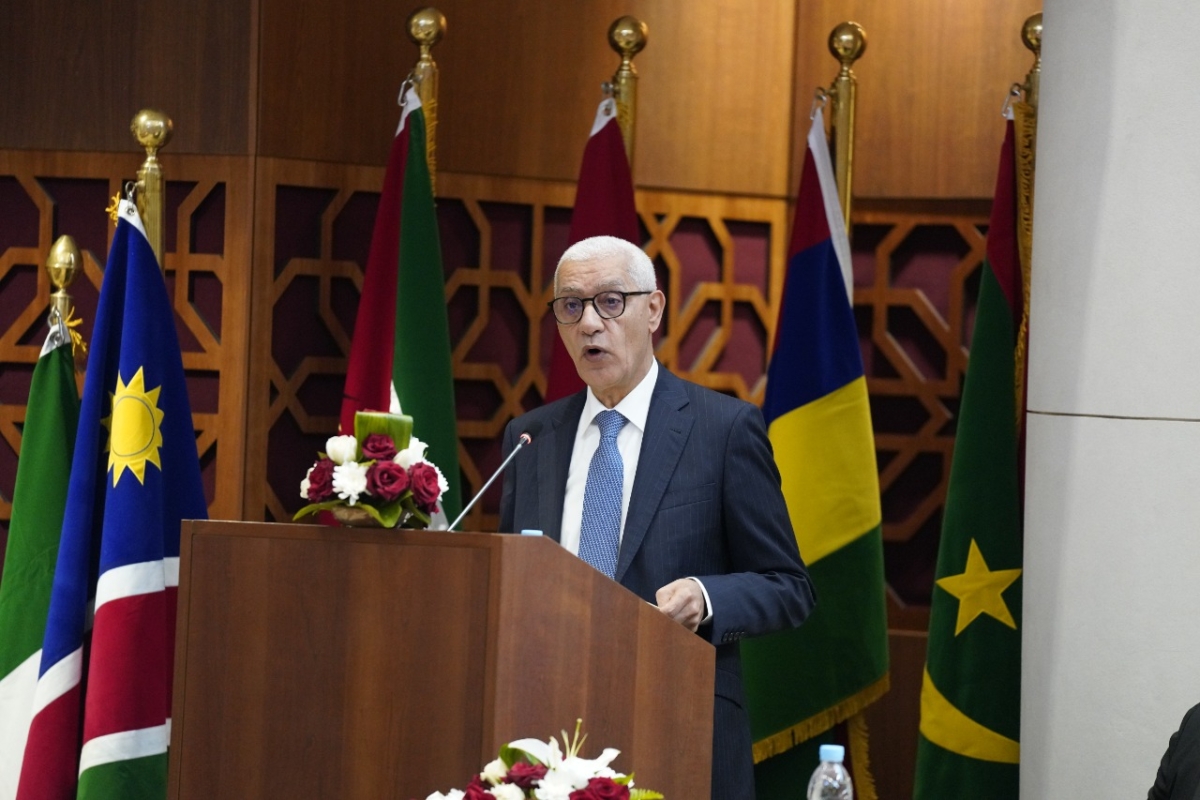
Morocco's Lower House Speaker, Rachid Talbi Alami said Sunday in Rabat that African youth constitute a fundamental force for achieving development in the continent.
In a speech during the opening of the work of the Second African Parliament for Youth Dialogue, which is organized by the African Parliament and hosted by the Moroccan Parliament, Talbi Alami said that African youth and their political elites bear the responsibility of "the African renaissance and the establishment of a new Africa, the continent of the future," stressing that African history is full of lessons which motivate to achieve this goal.
Talbi recalled King Mohammed VI's assertion before African leaders in 2017 that "the future of Africa remains dependent on its youth," and on "the urgent need to direct this demographic stock towards the continent's take-off." He added, "Unemployment of African youth is one of the continent's dilemmas, and it is a disruption of valuable capital. It is also a phenomenon exploited by terrorist and extremist movements and advocates of secession, which in turn constitutes one of the challenges facing our countries."
The Speaker of the House of Representatives affirmed that the successes achieved by African immigrant youth and African immigrant minds, in science and culture as well as in sports, are "a lesson for all of us to appreciate the energies of our youth, who are called for more civil and political commitment in order to support state and institutional construction and strengthen democracy in the continent that should take into account our contexts, historical circumstances, African traditions and culture, and to be voluntary that peoples desire and possess according to the logic of accumulation."
On the other hand, Talbi Alami highlighted that Africa, which does not lack agricultural traditions and culture, manpower, skills and forearms, is “in need, in a number of cases, of good governance and mainly of new technologies produced by industrial powers that have a moral and political responsibility to support Africa on the basis of fair, institutionalized partnerships, which in turn benefits from the expensive African primary resources, specifically mining.
Also, Africa, Talbi Alami adds, which does not lack energy and conditions for energy production from renewable sources, it basically has the most valuable capital, which is human resources, forearms, and brains, bearing in mind that the basic capital in sustainable development, foremost of which is agricultural development, is human capital, which is nourished by very diverse and rich African cultures.
And after touching on the marine resources that the continent abounds in, he asked how to transform these capabilities into wealth, stressing that the answer to this question lies in the confidence of Africa, peoples, elites, and institutions, in these capabilities, and in the collective determination to invest them for the interests of Africa, directing spending on construction and development projects and making people happy, instead of spending on accumulating stagnant weapons and sowing illusions among people.
He affirmed that Morocco is an agricultural African country par excellence, that it does not and will not be stingy by making its expertise available to its African brothers, and that it is determined to continue cooperation and support for its brothers for intensive and environmentally-respectful African agriculture, recalling, in this regard, the “adaptation of African agriculture” initiative known as "Les 3 AAA" launched by King Mohammed VI, along with a number of his African brothers, during the World Climate Summit held in November 2016 in Marrakech, which seeks to contribute to raising the challenge of food security, which King Mohammed VI was proactive in considering it the greatest challenge facing the African continent.
In support of this trend, Talbi Alami explains, Morocco is harnessing the enormous potential it has in the field of enrichment in order to advance African agriculture through the projects of the OCP group, through African agricultural houses, and placing Moroccan skills at the disposal of a number of brothers.
He also pointed out that Africa also needs financial credits and investments in agriculture in order to produce food and ensure food security, and not be satisfied with the ambition to combat hunger, highlighting that such phenomena really question values and slogans such as solidarity, partnership and international cooperation, and test the global conscience, but they question African self.
In this regard, Talbi Alami says, we are required to advocate internationally for climate and food justice for Africa, for fair partnerships, for transferring technology that facilitates agricultural production, for not exploiting patents for financial and political pressure and extortion, and for transferring capital to finance large and strategic African agricultural projects.
He concluded that the African interior needs "rational planning" for modern sustainable agriculture, partnerships between the public and private sectors, opening African markets, and promoting environmental exchanges. As well as strengthening the solidarity agricultural economy, and financing micro-projects in the African countryside, which "will enable the provision of food and decent work at the same time."
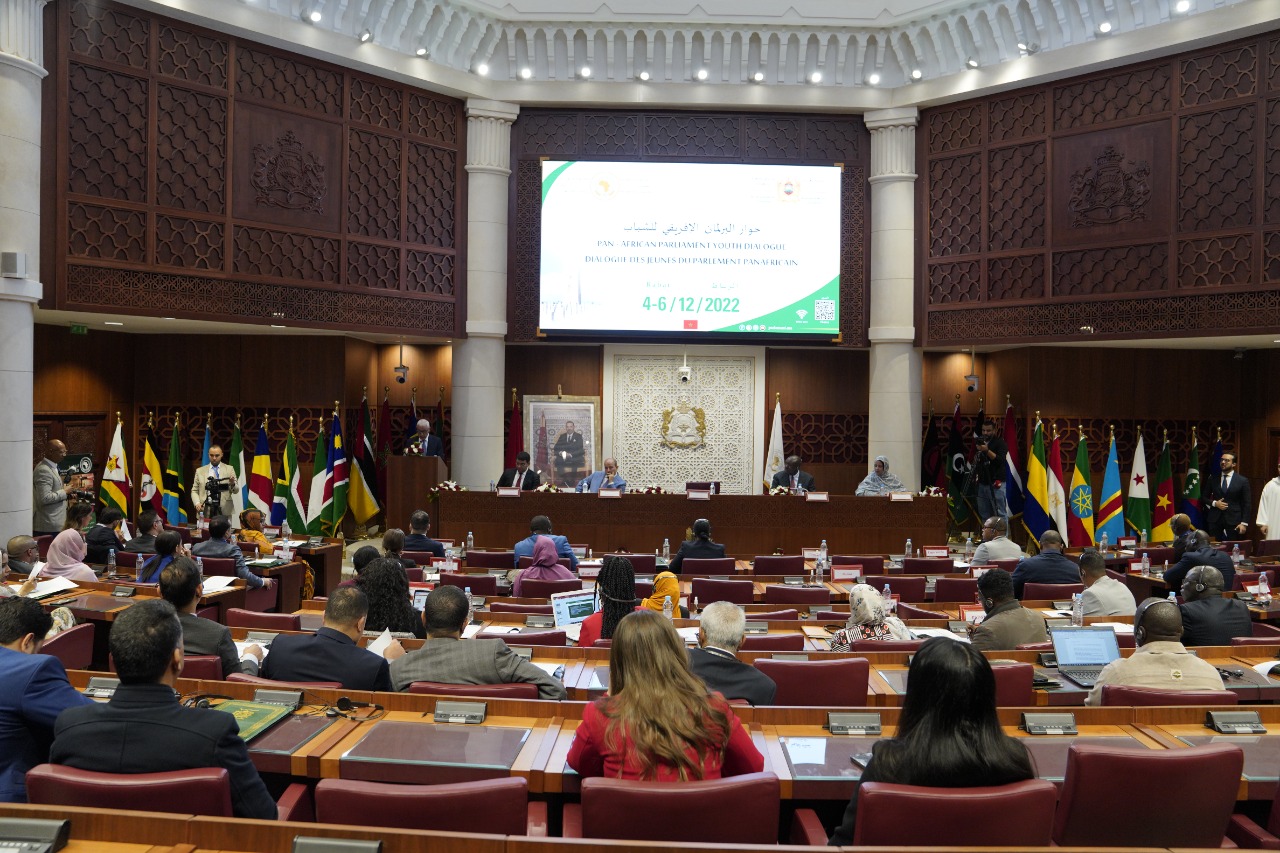
It is noteworthy that the participants in the second African Parliament for Youth Dialogue, which extends over two days, will address a number of topics, mainly related to the "African Union methodology for empowering and integrating youth", the two African Union initiatives to integrate women and youth financially and economically, and the initiative called 1 Million Next Level.
This event will also be distinguished by presenting the Moroccan experience in the field of youth empowerment, especially with regard to providing appropriate conditions for youth liberation and enabling them to take the lead in development issues, as well as the role of parliaments in youth empowerment, and youth empowerment through current legal and continental commitments undertaken by states members to address the issue of youth empowerment and the role of human rights and the rule of law in promoting the role of youth.