The attention of several African countries—particularly those that have increased their defense budgets, including Morocco—is turning toward the possibility of acquiring “UGV” (Unmanned Ground Vehicles) military platforms, which can be remotely operated, as one of the technological solutions that could change the way battles are managed, especially in harsh environments such as vast deserts.
According to a report by Military Africa, a news outlet specializing in defense in the African continent, these vehicles—whose market is growing in Africa—provide a means to bridge gaps in manpower and technology, with an ability to adapt to all local conditions. This makes them an attractive option for countries facing ongoing conflicts or persistent threats.
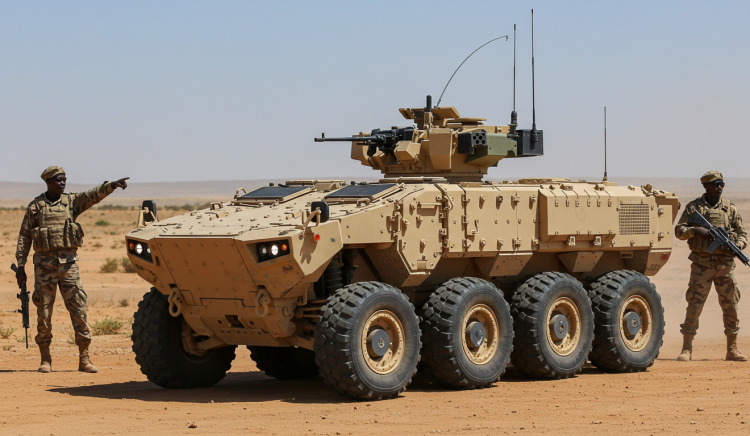
The same source notes that these vehicles range from small, hand-launched reconnaissance models to large platforms capable of carrying weapons or supplies. This gives armies the ability to expand their operations without exposing soldiers to direct risks—a vital advantage in prolonged conflict zones.
The features of these vehicles are well-suited to many countries, including Morocco, which faces security challenges in its southern desert due to skirmishes with the Polisario. They meet the operational requirements of “desert warfare” environments, capable of operating across wide areas under high temperatures and difficult terrain conditions, according to the Military Africa report.
The report stated that the African market for these vehicles reached about $65.5 million in 2023 and is expected to rise to $107.1 million by 2030, at an annual growth rate of 7.3%, reflecting the increasing interest of African states in such platforms.
It attributed the growth forecasts to increased defense spending in African countries due to concerns over terrorism, arms smuggling, and border incursions. Equipped with advanced sensors and surveillance systems, these vehicles offer the ability to reduce risks and enhance troop efficiency.
The report noted that some field trials of these vehicles have proven their effectiveness in regions such as the African Sahel, where the Estonian “THeMIS” UGV was deployed as part of France’s Operation Barkhane in Mali in 2019. It demonstrated the ability to transport half a ton of supplies, conduct surveillance missions, and evacuate the wounded under extremely harsh conditions.
According to the report, countries such as Libya and Tunisia have introduced this technology into demining and counterterrorism operations, while South Africa is investing in developing local models, including amphibious vehicles and others dedicated to reconnaissance and mine clearance.
In this context, new players have decided to enter the African market, such as Turkey, which has partnered with Egypt to produce UGVs locally—an initiative aimed at reducing dependence on imports and tailoring systems to regional conditions.
For Morocco, analysts believe that integrating these vehicles into its military arsenal could enhance its ability to monitor its vast desert borders, secure convoys, clear mines, and even carry out precision strikes against moving targets—all while reducing human casualties.