A Spanish newspaper has revealed that the European Union is moving toward taking measures to protect its automotive industry amid the rapid progress Morocco is making in this sector, which has become a direct competitor to European countries, particularly Spain.
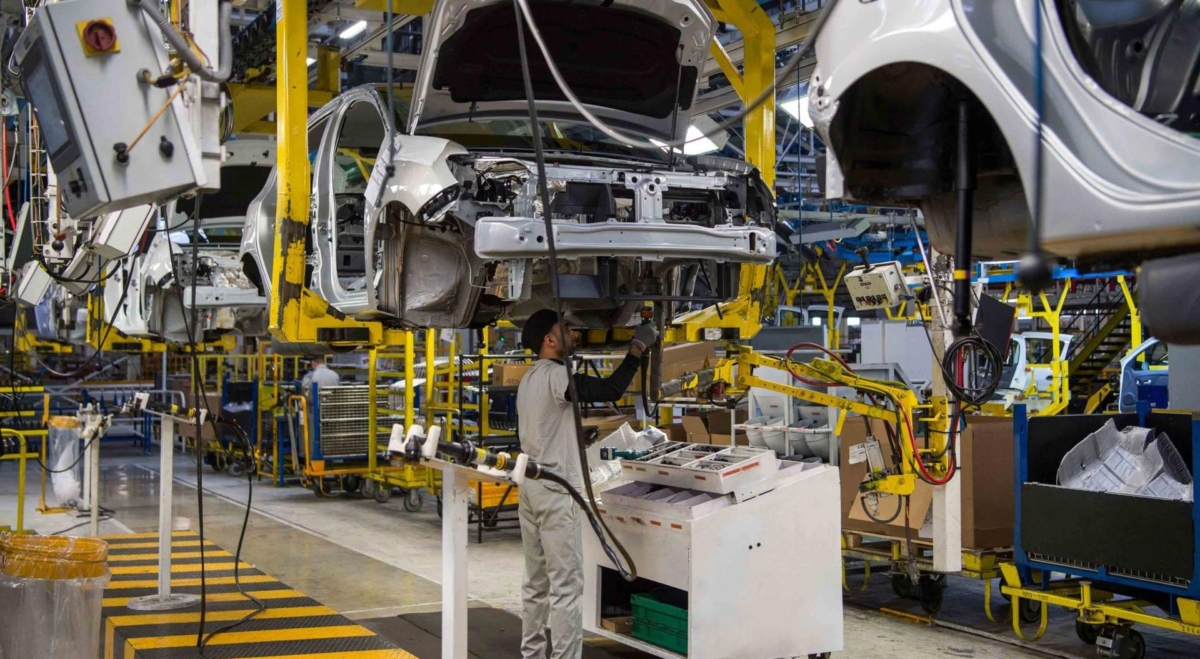
The Spanish daily El Debate reported that Morocco has been working for more than two years to establish itself as an industrial alternative to European countries in car manufacturing, benefiting from competitive advantages in energy and labor costs, as well as more lenient environmental regulations compared to those in Europe.
According to the same source, Spain produced 2.37 million vehicles in 2024, a 3% decrease from the previous year, while Morocco recorded a nearly 16% increase compared to 2023, with a total output exceeding 700,000 vehicles. This indicates the growth of the automotive industry in Morocco at a time when Spain is witnessing a decline, although Spain still holds the higher overall production volume.
In this context, the report pointed out that despite Spain maintaining its position as the second-largest car producer in Europe, factors such as Morocco’s lower production costs threaten that standing. For example, a factory worker in Morocco earns around €600 per month, about three times less than the average wage in the same sector in Spain.
The report also recalled a previous statement by former Stellantis CEO Carlos Tavares, who said that “Spain’s biggest industrial competitor lies to the south, not the north,” in a direct reference to Morocco. Stellantis already operates a plant in the kingdom and has plans for expansion, while French automaker Renault operates two plants in Morocco producing Dacia models.
In addition to economic advantages, the newspaper noted that Morocco’s environmental legislation is far more relaxed, offering greater manufacturing flexibility—another incentive for attracting foreign investment. The report also mentioned Morocco’s plan to produce one million cars annually by 2027, which will be shipped to European markets via the Tangier Med port, located just ten kilometers from Europe and considered one of the region’s largest ports.
The Spanish newspaper considered that these developments have begun to raise concerns in Brussels, particularly since Morocco is not only emerging as a car manufacturer but has also become a major producer of car components. This has prompted the EU capital to act by monitoring not only the origin of vehicles but also the origin of their components.
The report explained that the aim of this European move is to prevent vehicles assembled within the EU from being made entirely of foreign components, as is already the case in some instances. The measure resembles one previously announced by former U.S. President Donald Trump.
It is also worth noting that last March, the European Commission decided to impose new countervailing duties on imports of aluminum wheels from Morocco, a move aimed at protecting European manufacturers and safeguarding 16,600 EU jobs from what it described as “unfair” trade practices.
According to its official website, the Commission justified the decision by stating that investigations had uncovered government support inconsistent with World Trade Organization (WTO) rules. Morocco’s automotive sector, it said, receives grants, preferential loans, and tax exemptions—advantages that give Moroccan producers an unfair competitive edge in the European market.
The same source added that the investigations also found that China had provided direct financial support to one Moroccan exporter as part of the Belt and Road Initiative, which Brussels deemed an interference that distorts competition within the EU.
The countermeasures included duties ranging from 5.6% to 31.4%, with the lower rate applied to producers benefiting solely from Moroccan support, while the higher rate targeted those receiving combined support from both Morocco and China.
In response, Moroccan government spokesperson Mustapha Baitas expressed the kingdom’s rejection of the European Commission’s move. He stated, “The partnership with the European Union is a comprehensive one, and such a partnership cannot be subject to selectivity or tailor-made conditions. Therefore, a solution to these issues must be found.”
Baitas added that the Moroccan government is “currently studying all options to take the measures it deems appropriate to address these issues,” in a clear sign of Morocco’s refusal of the Commission’s decision and its determination to find a resolution to avoid harm to Moroccan manufacturers and exporters.