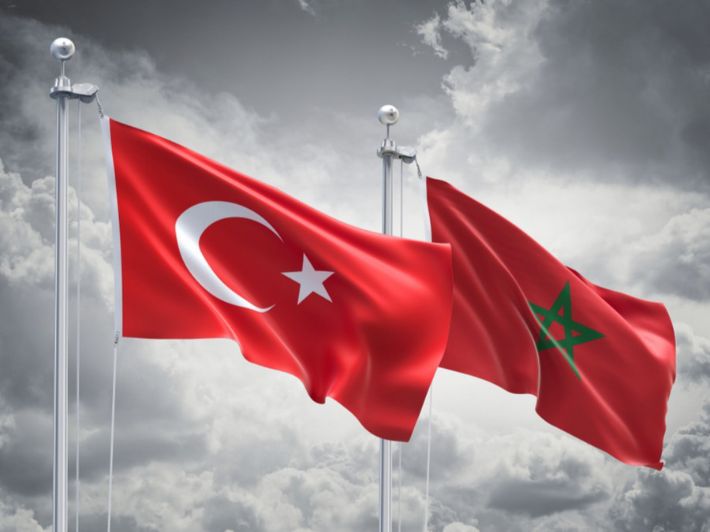
A high-level Turkish delegation composed of senior government officials, investors, and sectoral professionals is expected to visit Morocco in the coming weeks, in a mission organized by the Turkish Ministry of Trade to explore new avenues for bilateral investment and commercial cooperation.
The upcoming visit was announced by Turkish Minister of Trade Ömer Bolat during the Morocco–Turkey Business and Investment Forum held in Istanbul on Saturday. In his remarks, the minister underlined that strengthening mutual investments has become a central pillar for accelerating economic cooperation between the two countries, alongside efforts to expand bilateral trade flows.
Bolat emphasized that one of the key drivers behind the planned visit relates to Morocco’s preparations for hosting the 2030 FIFA World Cup. He noted that the large-scale projects underway for this global event create extensive opportunities for Turkish companies, particularly those specialized in infrastructure development. Turkish firms, he said, could play a significant role in stadium rehabilitation, hotel construction, road and transport upgrades, and the expansion of airport capacity.
Commercial relations between the two countries have grown steadily in recent years. Bilateral trade reached around USD 5 billion in 2024, according to previous official statements by the Turkish Minister of Trade. Despite this growth, the trade balance continues to heavily favor Turkey. Morocco’s imports from Turkey amounted to approximately 39 billion dirhams in 2024, compared to just 11.6 billion dirhams in Moroccan exports to the Turkish market.
This persistent imbalance led Morocco to revise the Free Trade Agreement binding the two countries since 2006. Amendments that came into effect in 2021 introduced tariffs of up to 90 percent on a range of Turkish goods. However, the impact of these measures on reducing the widening deficit remains limited.
Moroccan economic operators are now seeking new ways to reduce this imbalance, and the Business and Investment Forum in Istanbul reflected growing interest in rebalancing bilateral exchanges. Participants highlighted the need for practical mechanisms to support the expanding momentum of Moroccan-Turkish economic partnership, encourage two-way investments, and diversify cooperation across additional sectors. The objective, they stressed, is to move toward a more balanced and sustainable commercial relationship.
According to the global data platform Trading Economics, Morocco’s main imports from Turkey include iron and steel products, industrial machinery and equipment, non-railway vehicles, plastics, wood and furniture, textiles, and industrial fabrics.
Moroccan exports to Turkey, which remain significantly smaller in scale, consist primarily of automobiles and road vehicles, fertilizers, electrical and electronic equipment, certain chemical products, sugar and food supplies, dates, and—occasionally—food industry residues or animal feed.