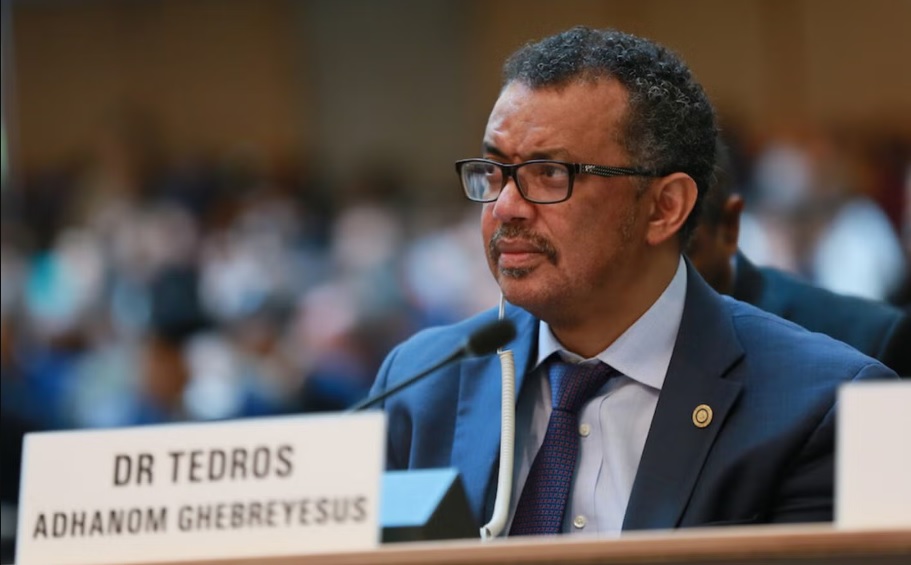
The Director-General of the World Health Organization (WHO), Tedros Adhanom Ghebreyesus, commended, on Tuesday in Marrakech, the Royal initiative of the Mohammed VI International Prize for Road Safety, dedicated to promoting efforts for safer roads.
Speaking at the opening of the 4th Global Ministerial Conference on Road Safety, Ghebreyesus said that the WHO was "honored to be the first recipient of this prize" in its first edition, shared with the United Nations Road Safety Fund.
He expressed concern that more than one million people lose their lives each year in road traffic crashes, which are the leading killer of children and young people. "This tragedy is compounded by the fact that most of these are preventable deaths."
"Change is possible," he underscored, particularly through the implementation of policies to prevent traffic collisions and save lives.
The WHO chief called for placing people at the center of road infrastructure policies, prioritizing the safety of pedestrians and cyclists, and noted that such ambition requires coordinated efforts and closer international collaboration.
Saudi Arabia’s Minister of the Interior, HRH Prince Abdulaziz bin Saud bin Naif bin Abdulaziz, Honorary President of the Arab Interior Ministers Council, highlighted his country’s efforts to promote joint cooperation on road safety and ways to preserve lives from road risks.
He pointed out that Saudi Arabia gives special attention to road safety, viewing it as a public health issue and a security and economic necessity for all countries.
Given the immeasurable economic, social, and health costs of this issue, he stressed that Saudi Arabia remains committed to addressing it with determination and innovative solutions, in line with international road safety goals.
For his part, the UN Special Envoy for Road Safety, Jean Todt, welcomed the fact that this major event was being held in Africa for the first time, to discuss such a crucial issue for all countries.
He emphasized that despite efforts, road accidents remain a major challenge that requires urgent action, pointing out the vast gap between promises and reality.
According to him, this situation is likely to worsen with the continuous increase in the number of vehicles and urban development.