Nestled in the Rif Mountains of northern Morocco, amid rocky slopes and pristine wilderness, stands Akchour, part of the commune of Talambot. It rises as a symbol of untamed natural beauty, somewhere between Chefchaouen and God’s wide sky, where nature greets you not with billboards or hotel facades, but with the murmur of flowing water—reminding you that you have arrived at a place unlike any form of tourism you’ve known.
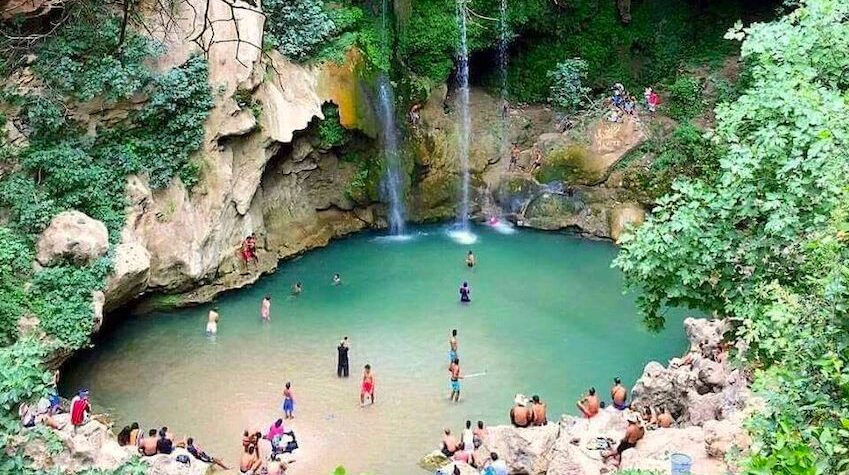
Here, no hotel fronts extend their welcome; instead, the smoke of barbecues and tagines rising from wood fires points the way, mingled with the scent of wild mint and the blue sky reflected in children’s eyes. Akchour is not merely a natural site—it is a spellbinding passage from the fleeting everyday to the eternal simplicity of life.
From spring to story: Akchour, carved by water and written by nature
The name Akchour may not sound complex, but in its popular meaning it encapsulates the essence of the place. Locally, it refers to the area along the banks of the Farda River, which originates from Ain Danou in Mount Tissouka, standing 2,122 meters above sea level. The site spans mountains, forests, and multiple waterfalls, about 30 kilometers from the blue city of Chefchaouen.
It is said that the name derives from an Amazigh expression meaning “flowing water” or “spring.” The meaning is unmistakable upon arrival: water in Akchour is not just a natural feature but the founding element of the place, the rhythm that shapes life here—through riverbeds, hanging waterfalls, or even the small irrigation channels that accompany you like a constant friend along your journey.
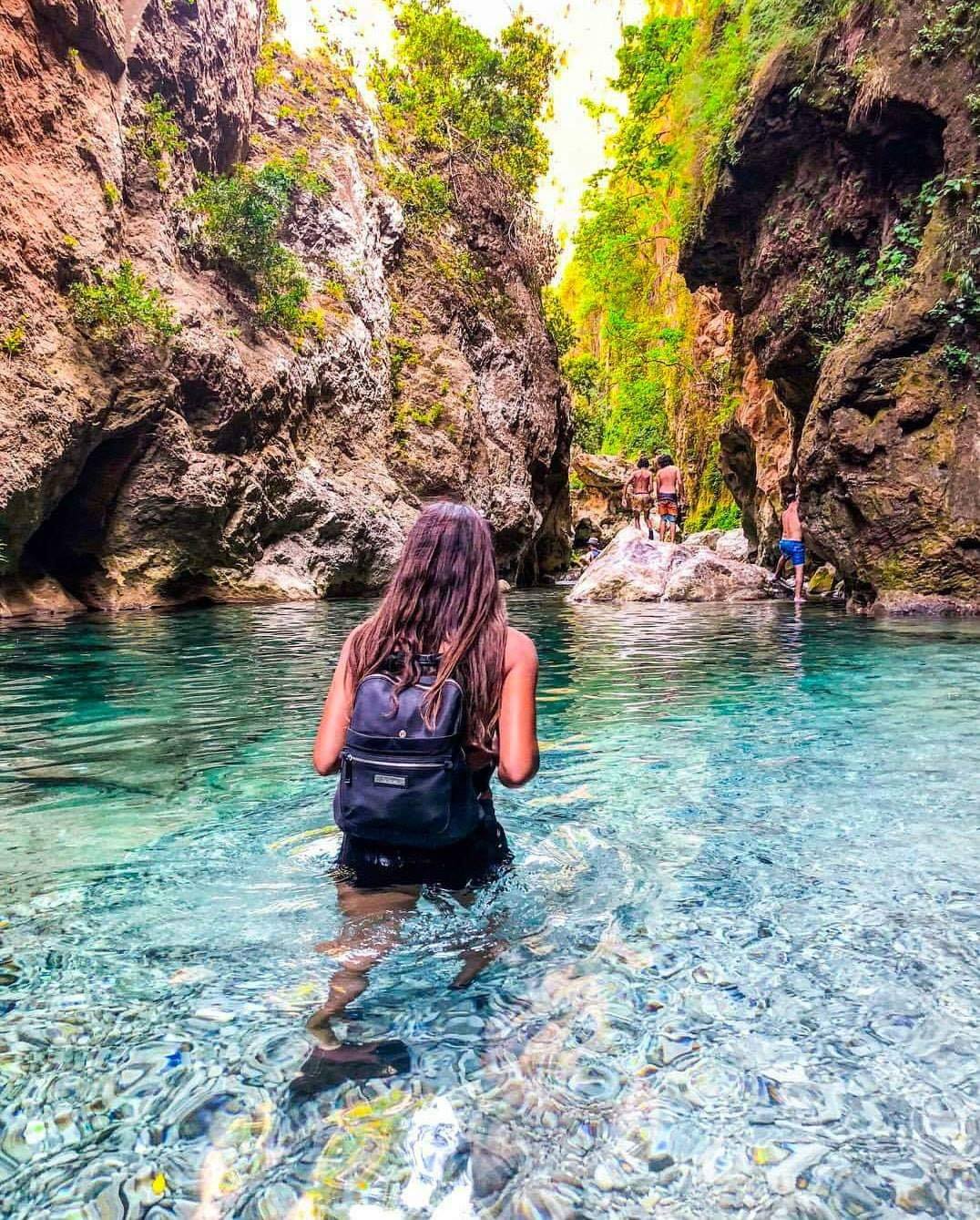
Once a crossing point for shepherds and hunters, Akchour has, in recent decades, become an alternative destination for those seeking serene tourism and rugged nature, especially after photos of its waterfalls spread widely on social media. Yet, despite its growing fame, it has preserved a distance of quiet isolation—and an even greater distance of authenticity.
Road to Akchour: Every turn a tale, every climb an adventure
Reaching Akchour is an adventure in itself. The journey begins in Chefchaouen, along a winding mountain road stretching about 30 kilometers, a trip that takes between 45 minutes and an hour depending on the mode of transport.
Travelers may use a private car, small buses departing from Chefchaouen, or shared grand taxis costing around 25 dirhams per passenger, leaving from Bab Al-Ain, the station where most tourists and adventurers set out for Akchour. Hiking enthusiasts can choose to stop at nearby villages and continue the trail on foot—a unique experience where every step deepens the immersion in nature.
For those starting from Tetouan, the trip covers about 70 kilometers to this green paradise nestled among mountains. By car or taxi, the journey takes around an hour and a half. Time, however, weighs lightly when your companions are towering trees and crisp mountain air.
The route begins on National Road No. 2 heading south, passing through Zenata and Beni Hassan, where gentle hills unfold. It then turns more scenic along Regional Road No. 406, leading travelers past small villages draped in green silence and splendor—until Akchour’s gates appear on the horizon, marked by water, waterfalls, and eternal freshness.
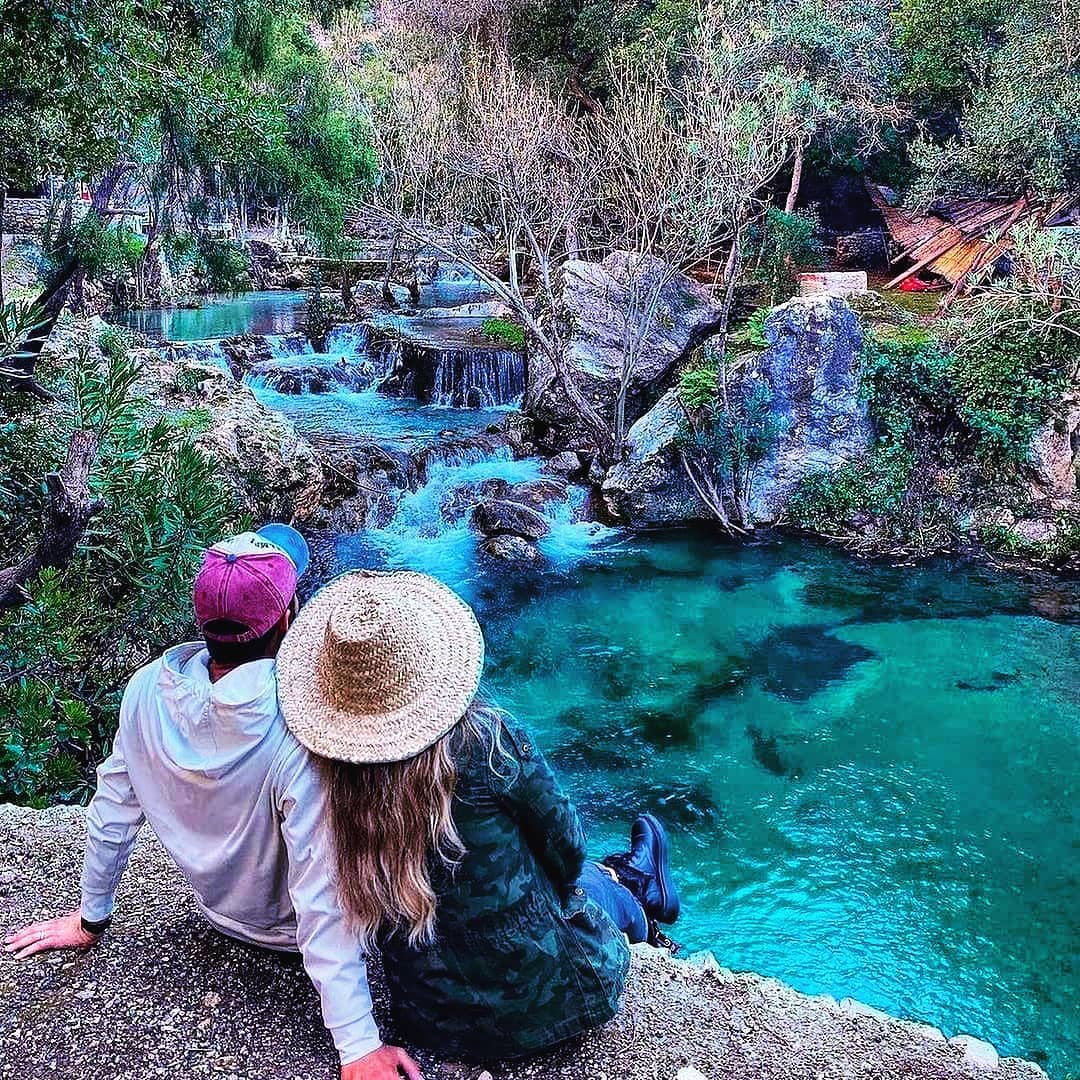
If you set out from Tangier, the road is longer but worth every minute: about 120 kilometers, or two and a half hours by private car or taxi, along National Road No. 2 with its legendary mountain bends, before branching onto Regional Road No. 406. From there, the road becomes almost like a secret passage through the trees, carrying you up and down as if in a silent dance with geography, broken only by the whispers of streams and meadows on both sides.
For visitors coming from other Moroccan cities or abroad, Tetouan’s Sania Ramel Airport is the closest gateway, located just an hour and a half away. Tangier’s Ibn Battuta Airport is also an option, especially for those wishing for a longer tour. From both airports, travelers can take taxis or book private transport through digital platforms—modern gateways connecting the traveler to this mountain dream. And as you set out from the airport, nature itself becomes your first host, greeting you with its colors and singing you its silent hymns until you arrive in Akchour.
Houses at the Gates of Paradise: From Blue Chefchaouen to the Embrace of Akchour
Before you reach the waterfalls of Akchour, and before your feet touch the rocky pools and fresh waters, you must first choose a place to stay. Options abound and experiences differ, but all share one thing: immersion in beauty and harmony with nature.
Just a few kilometers away from the sound of running streams and Akchour’s waterfalls, guesthouses stand like traditional homes opening their doors onto mountain vistas soothing to the eye. Prices range between 300 and 450 dirhams, depending on the tourist season. They offer simple rooms surrounded by olive and willow trees, with stone courtyards where mint tea is served under the sky’s canopy.
These guesthouses, built from local stone and inspired by Chefchaouen’s architectural details, have rooms overlooking branching waterways, as though they are part of the natural story Akchour continues to weave every day. Staying here feels like adding another chapter to the book of your journey.
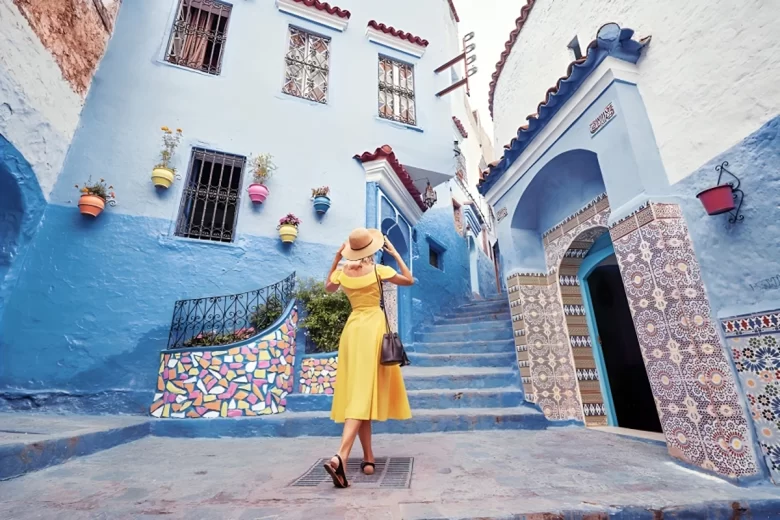
If you prefer to base yourself in the city of Chefchaouen, the blue alleys themselves host houses that offer more than just accommodation—they offer an emotional state hard to replicate. In a quiet neighborhood, like a jewel adorned with Andalusian motifs, breakfast is served in a flower-filled courtyard. Prices start at 400 dirhams. For something more luxurious, options begin at 2,200 dirhams, with carefully designed gardens and rooms opening onto panoramic views of the mountains and the city—a silent invitation to contemplation.
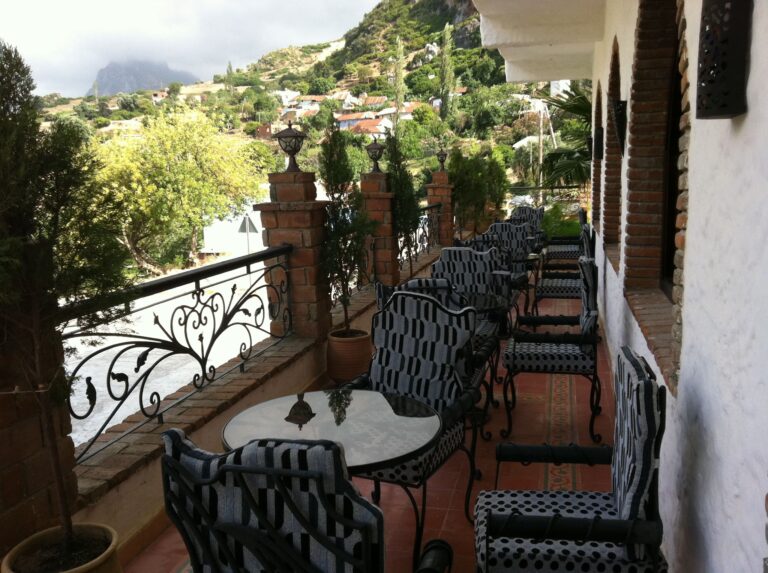
In the heart of the old medina, there are guesthouses resembling traditional homes that narrate the details of authentic Chefchaouen life: wooden doors, old tiles, ceilings whispering stories. Stays here start at 600 dirhams and often include exploratory trips to Akchour or the Talassemtane forests, blending a family-like atmosphere with a strategic location.
For those seeking a simpler, backpacker-style experience, there are budget stays starting at 90 dirhams per night in shared rooms, with the rare chance to meet travelers from different cultures. Alternatively, you can rent a rural house from locals in nearby villages, with prices ranging from 200 to 400 dirhams per night depending on the season and group size. Most of these homes offer a mountain-style breakfast of barley bread, olive oil, and local cheese.
Yet, the most unique experience remains camping. Adventure seekers often head to elevated plateaus or riversides, pitching their tents to spend extraordinary nights under a starry sky, accompanied by the never-ending sound of water. There is no fear of assault or disturbance—the area is safe and serene, reflecting the peaceful character of its local inhabitants.
Cuisine in Akchour: Where Simplicity is the Secret of Flavor
At the entrance of the natural site, simple wooden restaurants greet you—some built like reed huts, filled with the aroma of food cooking over coal or wood fires. These eateries feel like an extension of nature itself, serving what the local market provides—fish, meat, or chicken—yet always infused with the spirit of the mountains.
Among the most popular dishes are free-range chicken tagine with olives, lamb or veal tagine, and sometimes goat, which villages in the Chefchaouen region are known for. All are slow-cooked in open clay pots, releasing aromas of spices and preserved lemon, and served hot with traditional bread baked in clay ovens still holding the ash of past fires and the flavor of memories. You will also find freshly fried or grilled sardines, sourced from the markets of Chefchaouen or Oued Laou, accompanied with lemon slices and a touch of seasoning.
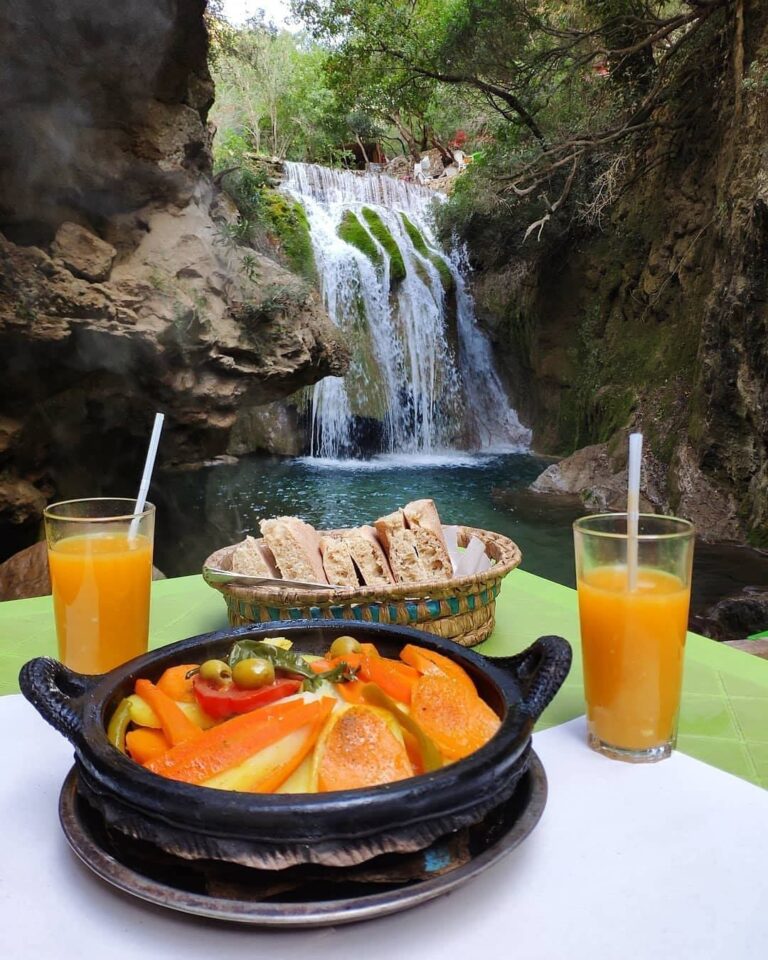
If you arrive in Akchour in the morning hours or during the chill of winter, you might find comfort in a bowl of bissara, a traditional dish made from fava beans or peas. It is served warm, drizzled with olive oil and sprinkled with cumin, alongside mountain tea blended with wild herbs. Even the water here has a different taste—cold, refreshing, and straight from nearby springs, quenching both thirst and soul.
Akchour Waterfalls: Where Water Dwells and Rituals of Wonder Unfold
The most striking feature of Akchour is its breathtaking waterfalls, an unavoidable stop for any visitor. To reach them, it’s not enough to just read about them—you must walk, climb, overcome rocks, and cross makeshift wooden bridges built skillfully by local hands. Depending on your pace, it may take anywhere between 45 minutes and 3 hours of hiking along trails framed by lush green slopes, from the nearest point to the farthest waterfall.
And when you finally hear the roar of water, all fatigue disappears. You enter a space that feels worthy of being unveiled by a miracle. The waterfall is surrounded by forests of oak, Moroccan cedar, and rare plants growing on prominent mountains in the heart of Talassemtane National Park, which has been on UNESCO’s tentative list of World Heritage Sites since October 12, 1998, and is part of the transcontinental Mediterranean Biosphere Reserve.
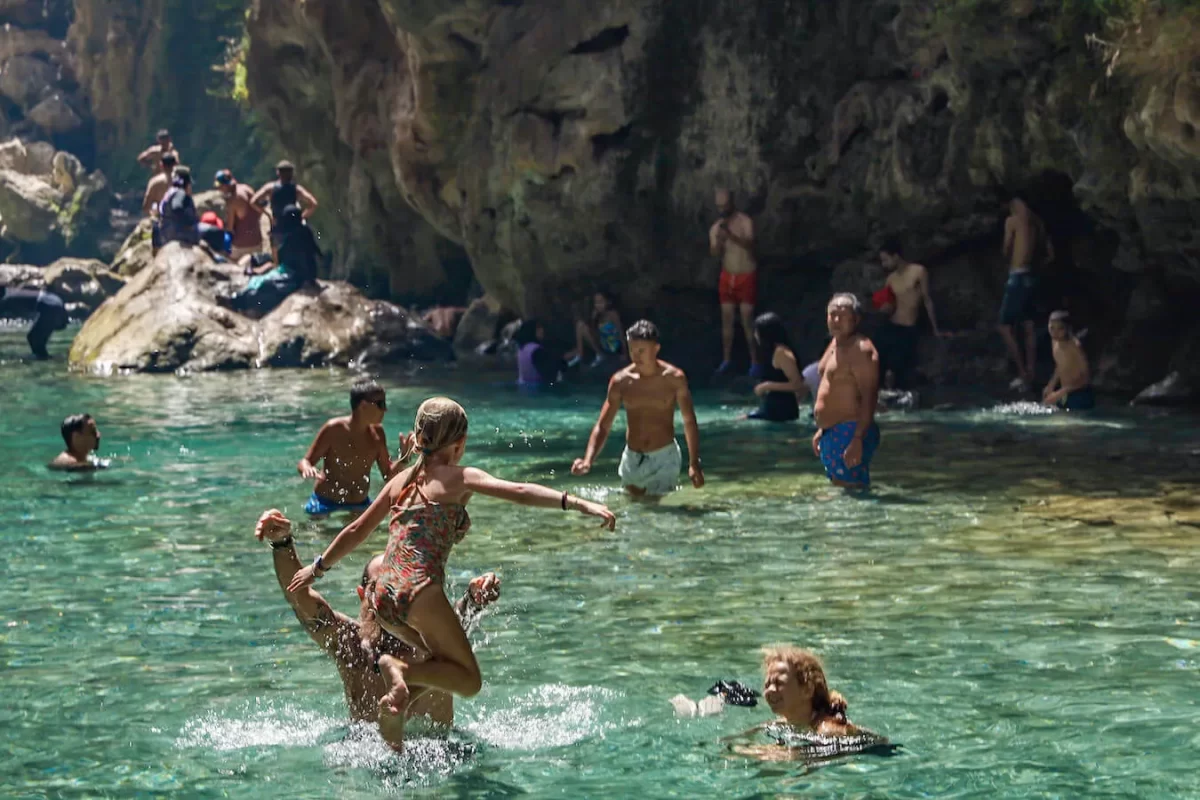
Beside the main waterfall, you may stumble upon small bends and cold water streams forming natural pools—irresistible for swimming and relaxation. Among the area’s side marvels is the famous God’s Bridge—a literal translation of the local expression “Al-Qantra D Rbi”. It refers to a natural rock arch, resembling a bridge crafted by divine hands rather than human ones, that appears after about a 45-minute hike, as if nature designed it especially for those seeking a short yet awe-inspiring escape.
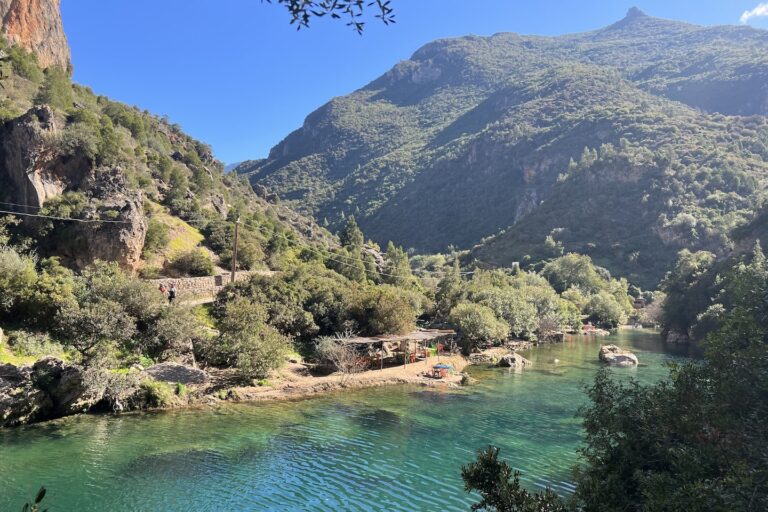
If you choose to venture further, you’ll find yourself immersed in enchanting beauty, the kind one usually only sees in animated films. Springs of icy water and crystal-clear lakes beckon you to swim. Step by step, the noises of machines and human chatter fade away, replaced by the murmurs of birds and the whispers of wind weaving through the trees.
It may not be easy for everyone—the journey demands effort and patience. Yet, as you advance along forested paths carved by streams, something seems to encourage you to continue. And it’s a choice you won’t regret when you finally arrive at the “ultimate threshold” of the region: the great waterfall, where water cascades with raw power and magic, breaking the silence of the place and declaring that Akchour is truly one of a kind.
What makes Akchour special is that it is lived, not just photographed. It’s the place that reconnects you with yourself and teaches you that simplicity is not poverty, but a form of true wealth. When you leave, you won’t dwell on the selfies you took—you’ll remember the moment you sat aimlessly on a rock, simply watching the water flow, just as life flows: pure, relentless, and ever-continuing.
Such is Akchour—not a fleeting spot on a tourist map, but an experience that seeps into you through its smallest details, leaving behind a quiet trace, like the smile of a child from a nearby village or a warm cup of tea in the midst of the mountain’s cold.