
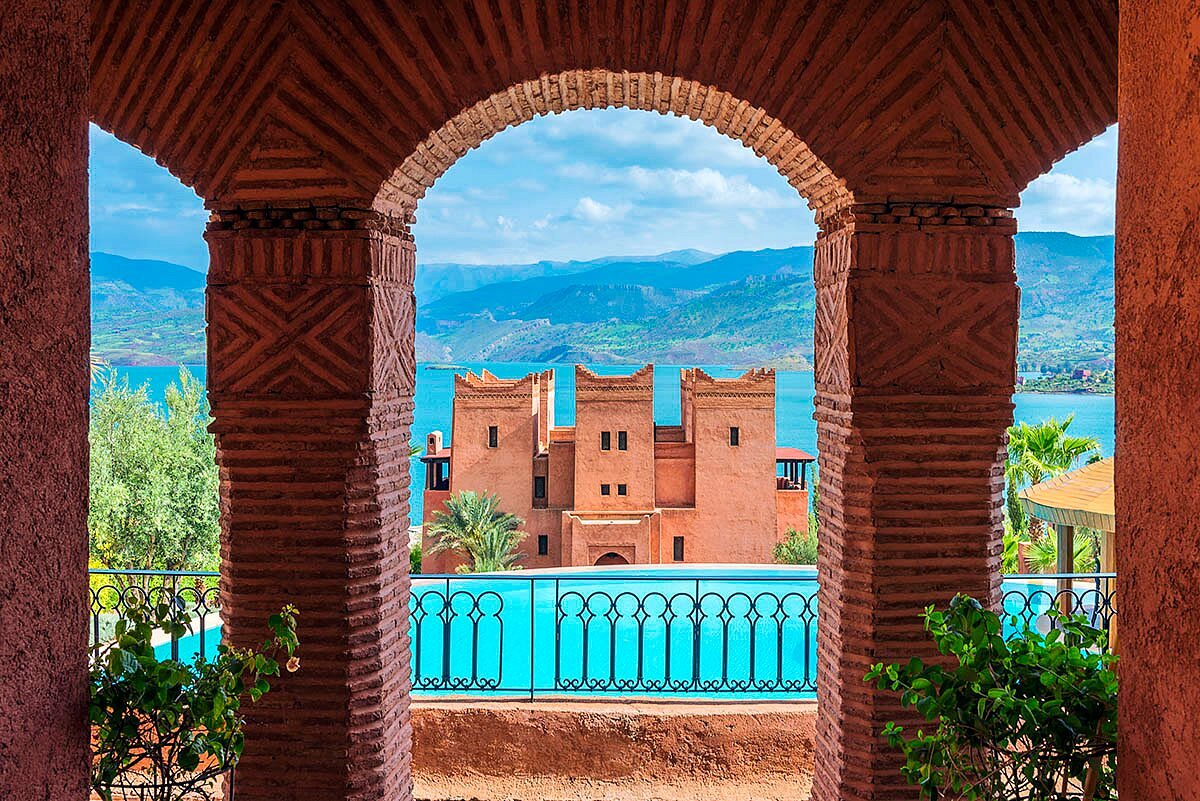
In the heart of Morocco’s Middle Atlas, at an altitude of more than 800 meters above sea level, “Bin El Ouidane” Lake sparkles like a rare aquatic jewel. It stretches over an expansive area of about 4,000 hectares, surrounded by a rugged yet captivating mountain range, where the deep blue of the water meets the hues of the mountains, shifting from green in spring to white when blanketed with snow in winter.
Here, 28 kilometers from the city of Azilal and around 60 kilometers from Beni Mellal, visitors hear nothing but the roar of flowing waters from the giant Bin El Ouidane Dam. It is a natural canvas telling the story of Morocco’s hydraulic and engineering legacy, drawing thousands of visitors and tourists in search of the calm of nature and the warmth of mountain hospitality.
The story of a name and a place: from dam to village
The name “Bin El Ouidane,” as a small village belonging to Azilal Province in the Béni Mellal-Khénifra region, is directly linked to the famous dam built in the 1940s (officially inaugurated in 1953). As one of Morocco’s largest irrigation and hydroelectric projects, the dam, standing more than 130 meters high and spanning over 290 meters, was constructed to store the waters of Oued El Abid and irrigate the fertile Tadla plains. Over time, however, it transformed into an exceptional tourist and ecological space.
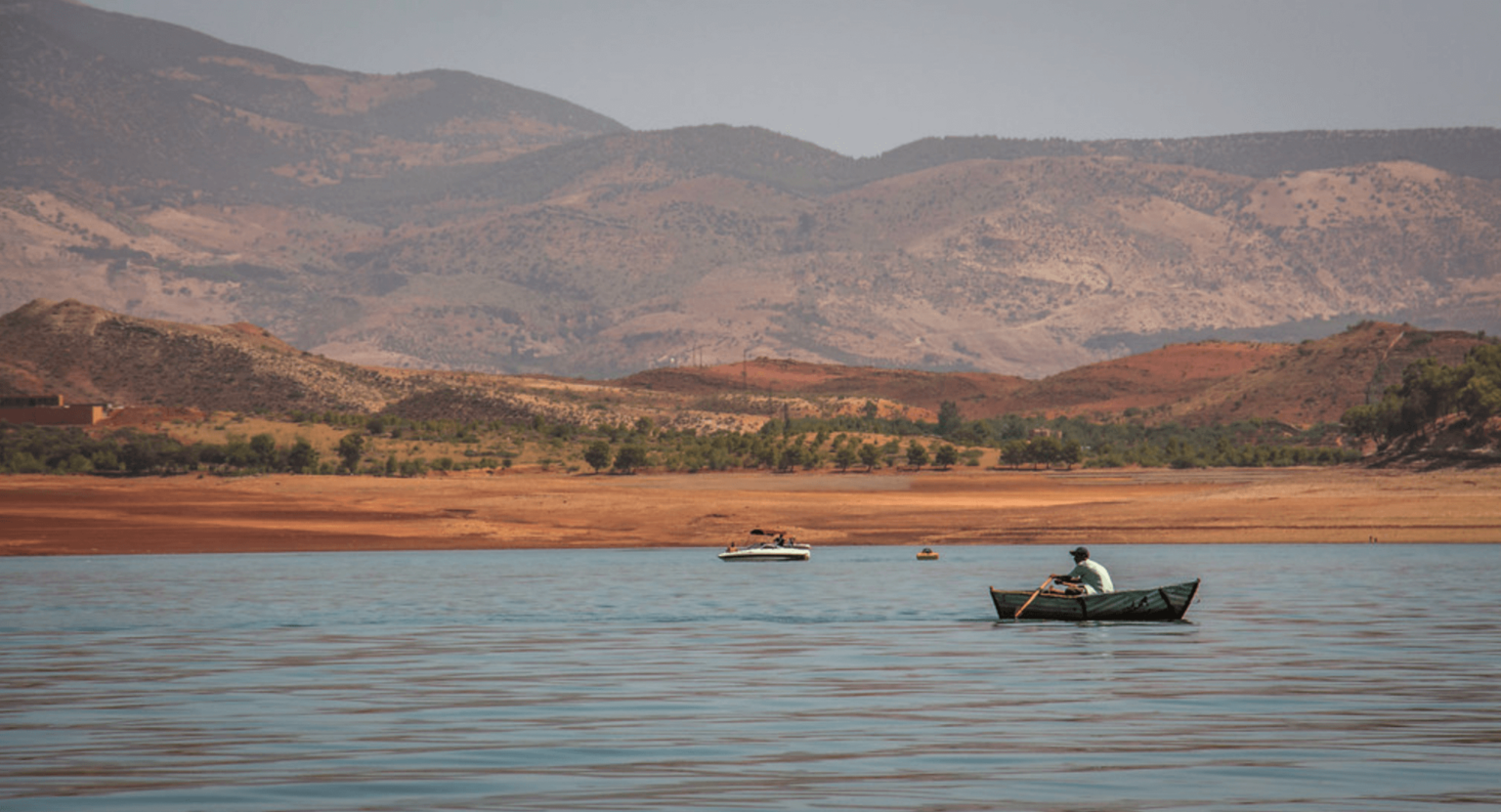
Beside the dam, a small village emerged carrying the same name. It initially housed the workers of the project and their families, then gradually became a tourist attraction thanks to the lake that mirrored the charm of the Atlas. The place thus came to embody both the engineering memory of Morocco’s modernization and the natural memory preserved by the mountains and the lake for generations.
The road to Bin El Ouidane: a delightful ascent to the Atlas
Reaching Bin El Ouidane is a journey in itself, not just a destination but a gradual geographic crossing. From Casablanca or Rabat, one can take the A4 motorway towards Beni Mellal (223 km from Casablanca, 230 from Rabat), then continue through a winding provincial road toward Azilal and then Bin El Ouidane (about an extra hour).
From Marrakech, the route is rougher but more enjoyable, passing through Tanant, Tazart, and Sidi Rahal before reaching Azilal (about 200 km), crossing hanging mountain villages and deep valleys. From Fez and Meknes, the journey goes through Khénifra, then to Beni Mellal, and finally Bin El Ouidane.
Buses and private cars are available, but the best option remains private cars or rentals, as the mountain roads invite multiple stops for photos and moments to savor the road itself.
The lake… the blue heart of Bin El Ouidane
In the heart of the Middle Atlas, where towering mountains stretch and forests meet the water’s surface, lies Lake Bin El Ouidane, a rare natural masterpiece of beauty and purpose. The lake, extending across four local communes within Azilal Province and the Béni Mellal-Khénifra region, has over the years become a symbol of the fragile balance between humans and nature.
Over time, Bin El Ouidane Lake has turned into a natural paradise interspersed with oak and juniper forests and teeming with multiple fish species that sustain a significant part of the local population through fishing. Approaching the lake’s shores reveals the tranquility and charm of the place, where the clarity of the water blends with birdsong and the fragrance of forests, creating a unique harmony of natural elements.
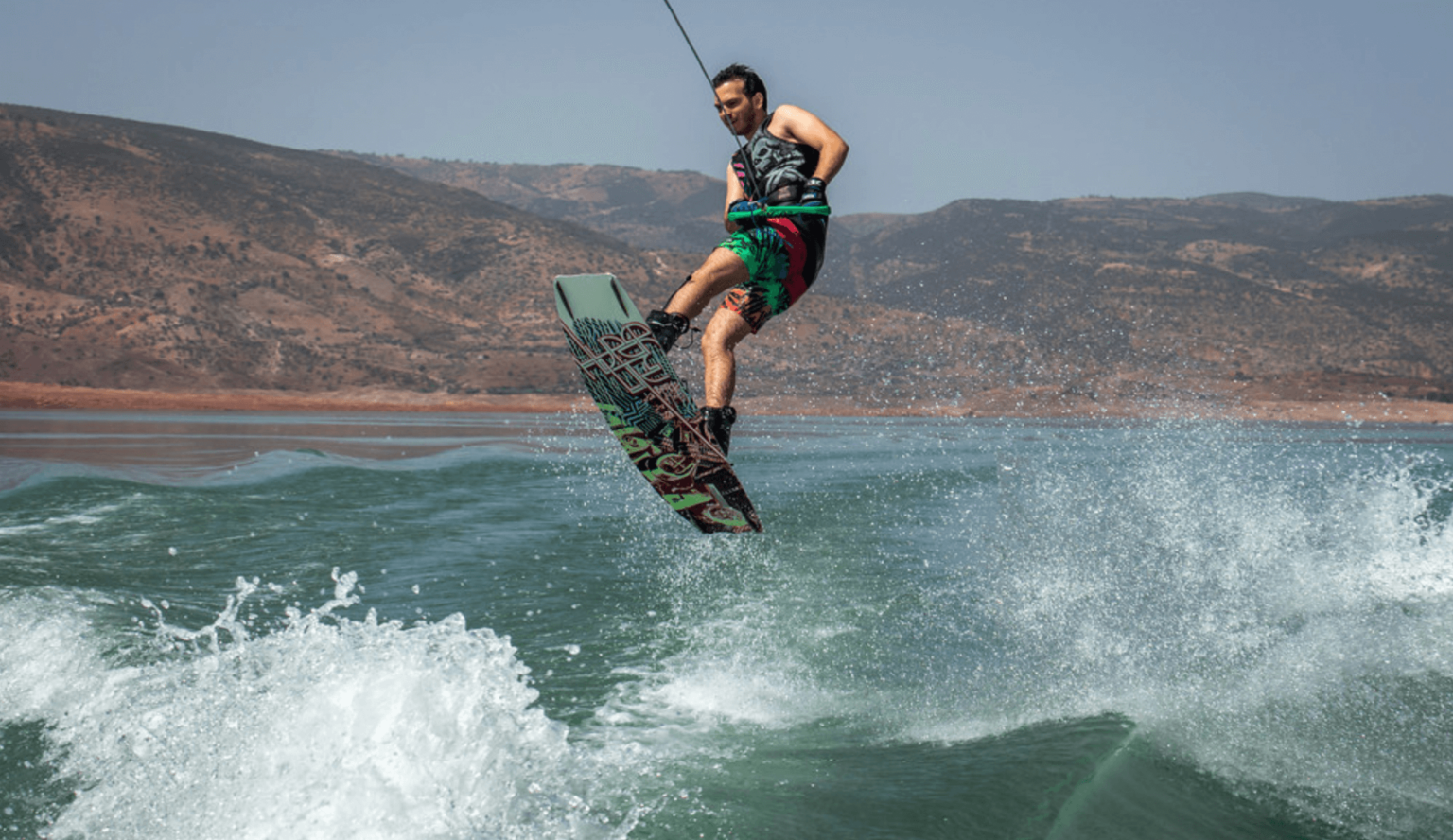
Today, the lake is a favorite destination for countryside and nature lovers. Travelers, whether on foot, riding mules, or cycling, find in its surrounding trails an ideal space for hiking and adventure. Visitors come not only from nearby regions but from across Morocco and abroad, seeking the pleasures of swimming, diving, boating, or simply relaxing in a natural environment that continues to resist the pressures of drought and human activity.
Alongside rod fishing that attracts enthusiasts thanks to the abundance of species such as mullet and perch, the lake at dawn, when fog glides over its surface, resembles a calm oil painting, while at sunset it transforms into a natural light show as slanting rays reflect on the water.
The surrounding nature: mountains, hanging villages, and endless activities
The beauty extends beyond the lake to the mountains surrounding it. Small villages like Ait Mazigh and Ouizguit preserve an ancient Amazigh memory, where locals continue their simple lives in tune with farming and livestock. In spring, the slopes become carpets of wildflowers, and in winter the peaks are adorned with snow, making the area suitable for tourism year-round.
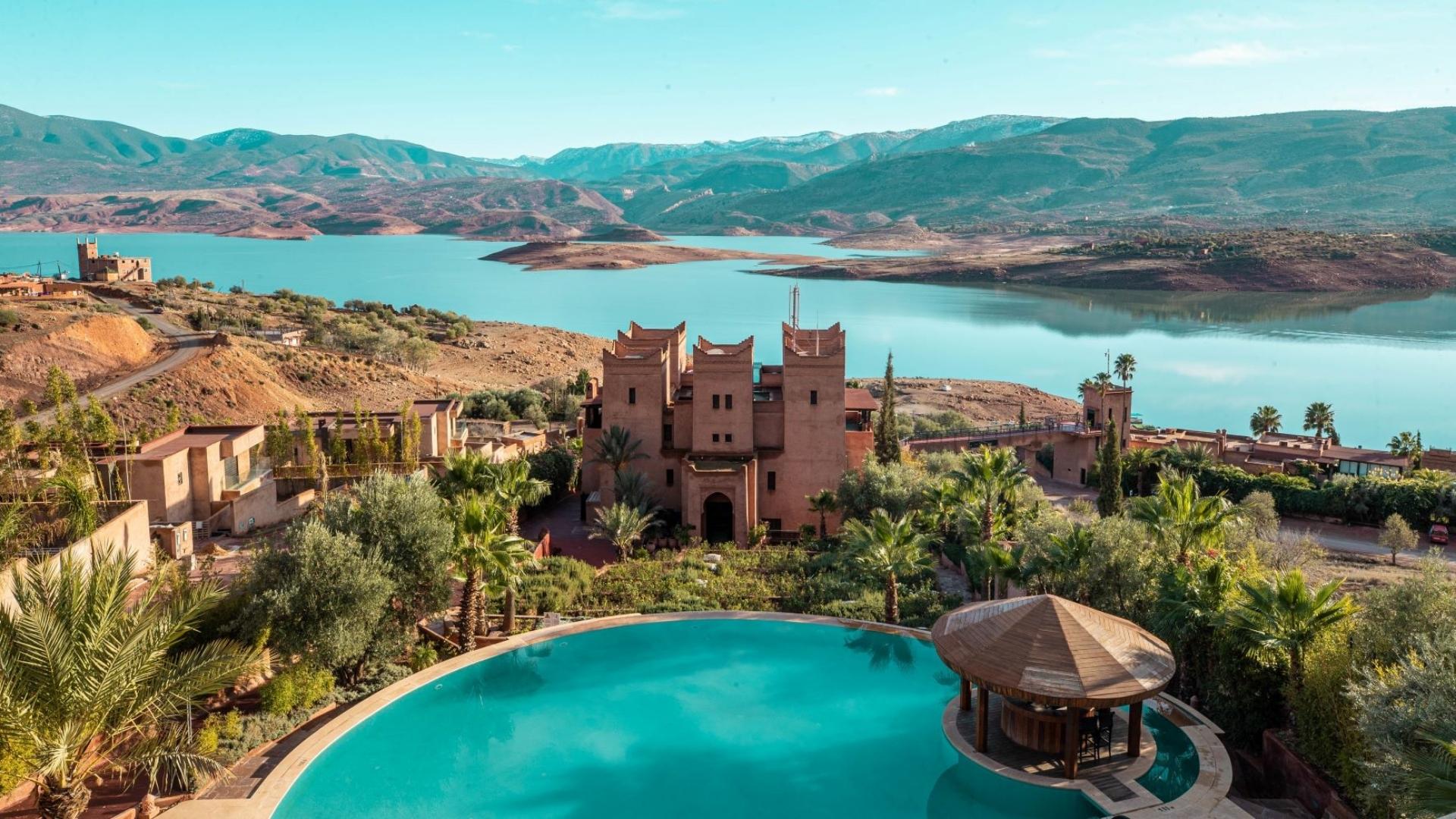
One can combine mountain hikes on trails around the lake with visits to the Ouzoud Waterfalls (60 km away, over an hour and twenty minutes by car), one of Azilal’s most renowned natural landmarks.
Food in Bin El Ouidane: the flavors of mountain and water
A visit to Bin El Ouidane Lake is incomplete without experiencing its traditional cuisine, which combines the simplicity of the mountain with the generosity of Amazigh hospitality. The place is known not only for its natural beauty and calm waters but also for dishes that reflect the bond between people, land, and water.
On the lake’s banks or in the guesthouses spread across the area, visitors are welcomed with tajines exuding the aroma of tender meat slowly cooked with dried figs or black prunes, blending sweet and savory in a recipe passed down through generations.
On Fridays, Amazigh couscous takes center stage, decorated with pumpkins and seasonal vegetables grown in fields around the lake. At certain times, couscous is prepared with “mountain greens” gathered from nearby pastures, giving it a unique flavor not found in big cities. Fish lovers also enjoy dishes prepared from freshly caught lake fish, either grilled over charcoal or cooked in tajines rich with local spices.
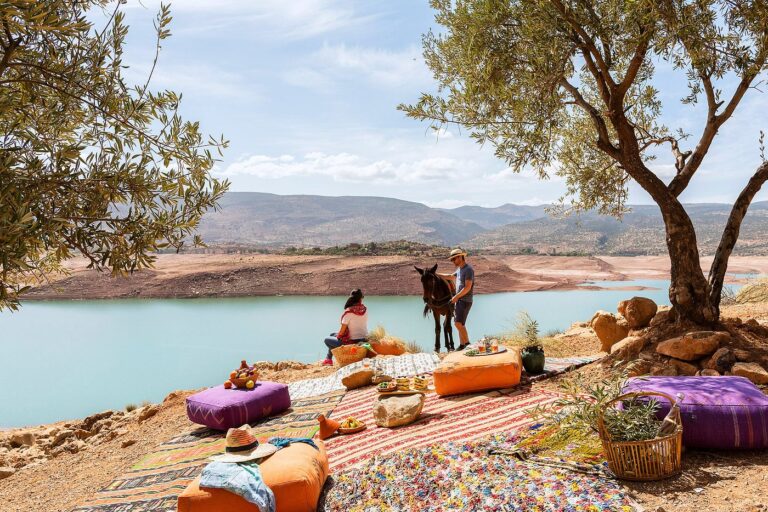
The experience extends to tea rituals, an essential part of hospitality. In addition to the mint tea known across Morocco, Bin El Ouidane stands out with teas infused with mountain herbs such as thyme, rosemary, and wormwood. Often picked from surrounding slopes, these herbs give the tea a strong, fragrant flavor of the mountains. Many visitors consider this tea the “endnote of the trip,” a sensory memory that lingers long after leaving.
The experience is complete when these meals are served outdoors, on terraces overlooking the lake or amidst orchards, where mountain breezes mingle with the steam of tajines and the clinking of spoons. It is a moment where nature’s beauty meets the generosity of the table, giving visitors the sense that Bin El Ouidane is not just a lake or a dam, but a living space embracing people, nature, and culture all at once.
Accommodation: between simplicity and luxury
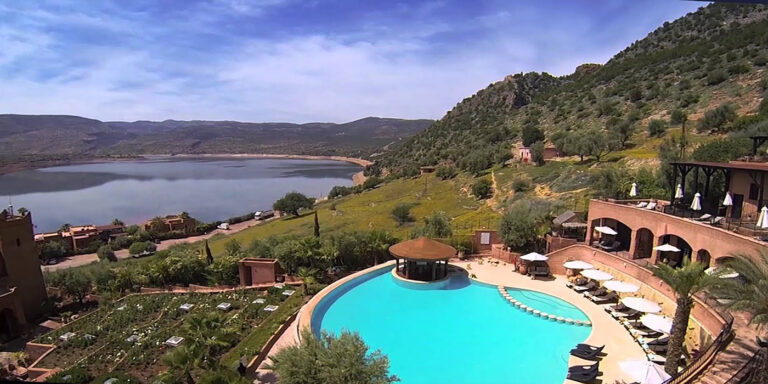
Bin El Ouidane offers multiple accommodation options, from hotels and resorts overlooking the lake and equipped with swimming pools and restaurants, to rural guesthouses offering a more authentic experience at prices ranging between 300 and 800 dirhams per night, depending on the season.
Hosts welcome visitors as one of their own, with the option of camping available for adventure lovers near the lake’s shores or within the forest.
When you leave… the imprint of water and mountain remains
As you leave Bin El Ouidane, the image of the calm water embracing the towering mountains, and the sound of nature accompanying you even after returning to the city’s bustle, will linger in memory. You will realize that Bin El Ouidane is not just a lake, but a journey into the depths of Morocco’s natural and human essence, an experience worth repeating many times.