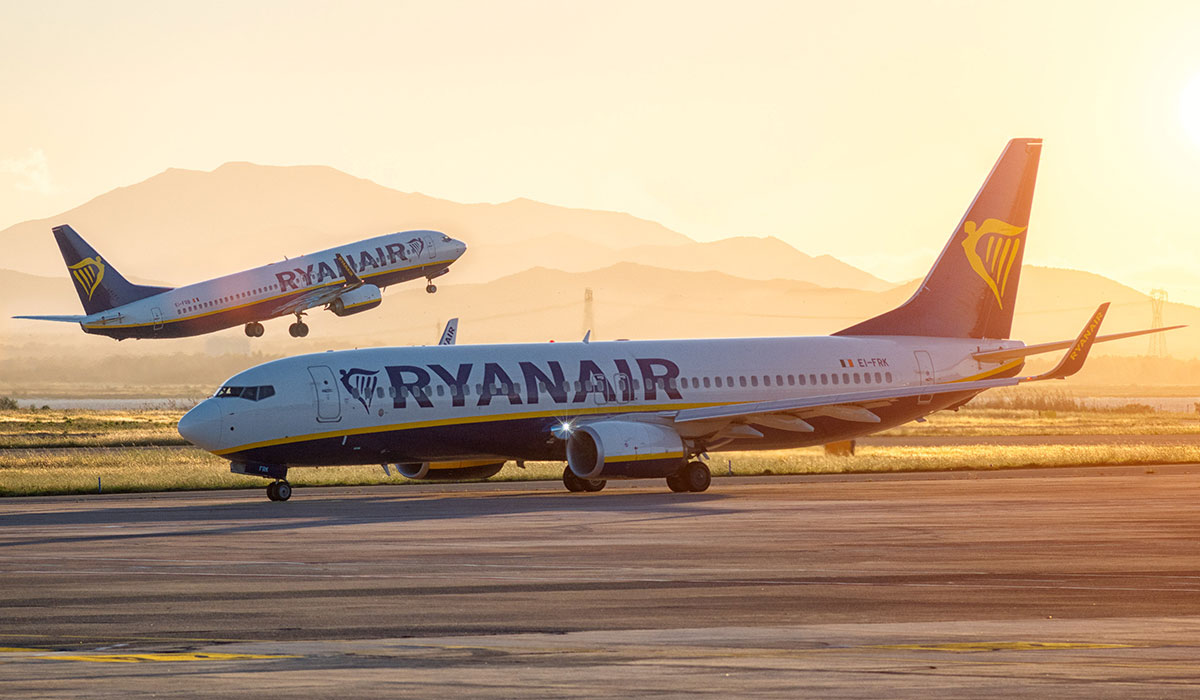
Low-cost airline Ryanair has announced a major reduction in its flight schedule to Spain for the summer of 2026, cutting approximately 1.2 million seats and redirecting them to other destinations, including Morocco.
According to international aviation sources, this move is part of a broader strategy by the company to counter rising airport costs in Spain, particularly at airports managed by the state-owned group AENA. As part of the decision, Ryanair will halt operations to and from Asturias Airport in northern Spain.
The same sources reported that this decision — which has sparked wide controversy in Spain — followed Ryanair’s criticism of the increasing fees imposed by AENA on regional airports, arguing that they make operations unprofitable. The airline’s CEO, Michael O’Leary, expressed frustration with the management policies of Spanish airports, calling for a restructuring of the fee system to ensure the continued growth of the aviation sector in the country.
It is expected that the 1.2 million-seat reduction will affect several Spanish airports, particularly those located in regions with low passenger traffic, where Ryanair has long been the largest carrier. The cuts represent around 10% of the company’s summer operating capacity in Spain.
In contrast, Ryanair reportedly plans to shift its focus toward major airports in Italy, Morocco, Croatia, Hungary, and Sweden, as part of an effort to offset its withdrawal from smaller airports and take advantage of more cost-competitive markets.
Notably, Morocco became the first country in the world to sign a special agreement with Ryanair to operate a domestic flight network, marking a historic precedent for the airline, which has traditionally focused on cross-border European routes.
In this context, the company announced in the summer of 2024 a $1.4 billion investment in Morocco, which included the launch of 11 new domestic routes connecting nine Moroccan cities — among them Marrakech, Fez, Tangier, Oujda, Tetouan, Ouarzazate, Essaouira, Agadir, and Laayoune.
According to several tourism industry analysts, this agreement was not merely a commercial deal but a strategic step with significant economic and developmental implications. Establishing low-cost air links between Moroccan cities that have long suffered from limited air connectivity — such as Ouarzazate, Errachidia, and Essaouira — helps break their isolation and create new opportunities for local investment and tourism.
The move has also contributed to redistributing tourist flows that were previously concentrated almost exclusively along the Casablanca–Marrakech corridor, opening new prospects for regional tourism in other cities.
The importance of this initiative, according to the same sources, also lies in the direct support it received from the Ministries of Transport and Tourism and the Moroccan National Tourism Office (ONMT). This reflects a governmental awareness that strengthening domestic air connectivity is an integral part of enhancing the national tourism offering.
Air travel, they stressed, is no longer merely a means of transporting foreign tourists, but a strategic tool for developing domestic tourism and promoting balanced regional growth across Morocco.