In northern Morocco, where the blue of the Mediterranean meets the green of the Rif Mountains, Jebha emerges like a peaceful natural painting—drawn by nature, shaped by the wind, and tinted by the sun in the colors of sunrise and sunset. It is a blend of simplicity and heritage, of sea and mountain.
In Jebha, you won’t hear the roar of engines that dominates large cities, but rather the whisper of waves gently brushing the shoreline rocks. Everything here invites calm, and encourages attention to the small details that breathe life into the soul: the taste of warm bread dipped in olive oil, the aroma of charcoal-grilled fish, and the smiles of locals that come before any words are spoken.
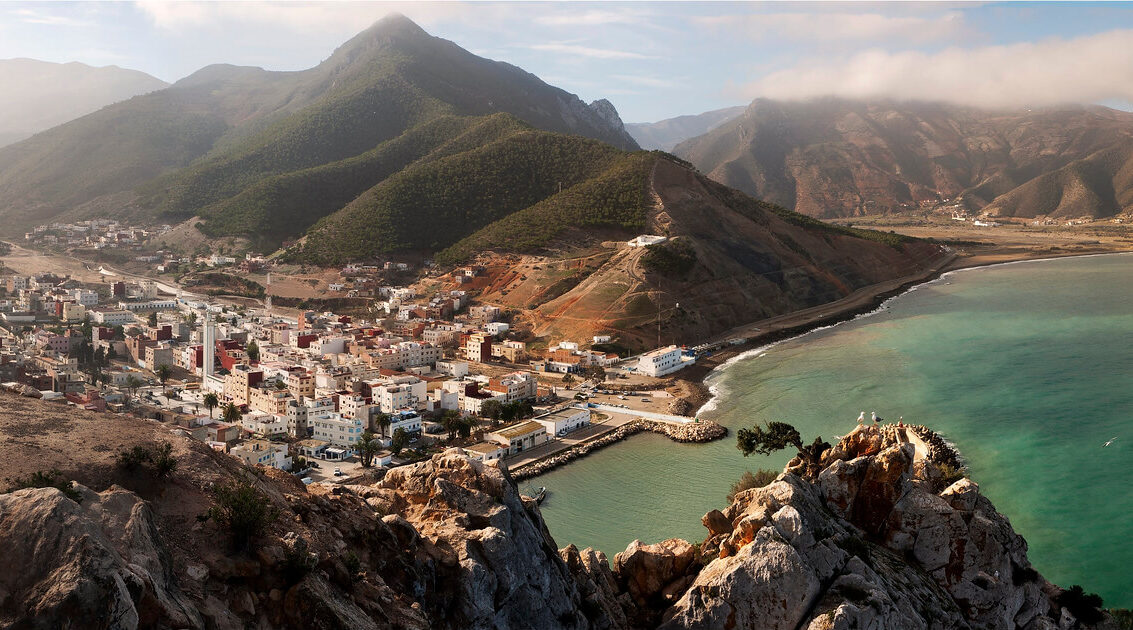
Jebha is not an overcrowded tourist destination, nor do its images adorn postcards. But it offers its visitors a rare moment of authenticity—where time slows down and nature reclaims its original place. It’s the kind of town you visit once, and keep dreaming of every time you see the sea or smell wild thyme in the morning.
From “Corbucla” to “Jebha”: A Name Written by the Mountain and the Sea
The name “Jebha” holds a clear geographical significance. The town, which serves as the administrative center within the commune of Metioua in the province of Chefchaouen (Tangier-Tetouan-Al Hoceima region), lies at the foot of a mountain chain. It forms a prominent face overlooking the Mediterranean from the Rif, and in Arabic, “Jebha” refers to the front or forefront of something—reflecting the town’s positioning as a forward-facing slope between mountains and the coast.
With a population of around 4,500 as of the 2024 census, Jebha has not always carried this name. The Romans once called it Corbucla, meaning “camp” or “shelter”—a nod to its role as a natural harbor where trading ships could rest while heading toward the southern Mediterranean shores. During the colonial period, in 1926, the town was renamed Puerto Capaz in honor of Spanish General Osvaldo Capaz, who established the first urban settlement there as a monitoring and stabilization point. This name remained during the Spanish Protectorate until Morocco regained independence in 1956, when the name “Jebha” returned, carrying with it a long history of linguistic and cultural diversity.
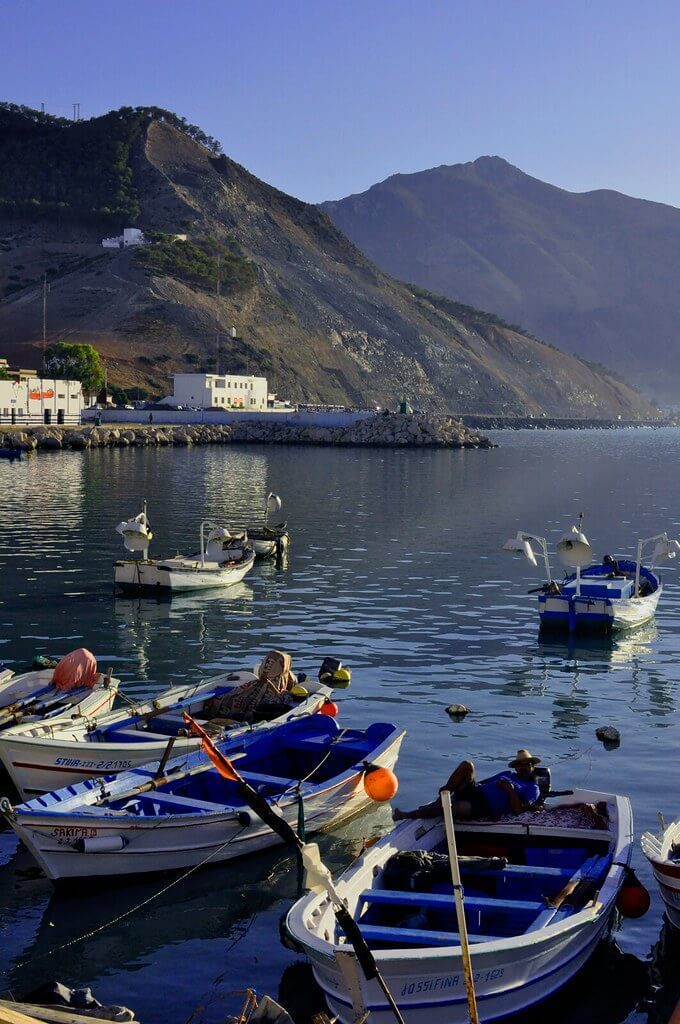
During the Spanish Protectorate, Jebha became a strategic location for maritime surveillance due to its proximity to vital sea routes linking Morocco with the occupied cities of Ceuta and Melilla. It was also a military outpost designed as a lookout over the sea, witnessing numerous political and social transformations in the region.
The Road to Jebha: The Joy of Travel Before and After Arrival
Reaching Jebha is a delightful journey through northern Morocco, where you leave the city’s noise behind and embrace rare natural beauty and unmatched calm. If traveling from Tangier—whether arriving from abroad via Tangier City Port or Tangier Med Port, or from within Morocco via high-speed train—you’ll need to plan well. Without a private car, your first step is a 60 km trip to Tetouan (about an hour), to reach the bus station where shared taxis depart for Jebha.
From Tetouan, National Coastal Road No. 16 stretches around 122 km and takes approximately two and a half hours by taxi or personal vehicle. The drive offers panoramic sea views, winding through small villages like Azla, Oued Laou, Stehat, Jnan El Nish, and Amtar—ideal for resting, enjoying simple local dishes, and taking in the scenery. This is especially important for those unaccustomed to mountain roads.
Coming from Al Hoceima, the distance to Jebha is just over 100 km—about two hours by car—through breathtaking mountain routes, with opportunities to stop in villages and sample traditional food. From Chefchaouen, the journey is also 122 km, taking about two and a half hours via regional and national roads through green landscapes and villages such as Mezlafn, Talembot, Oued Ifartan, and Kaâ Asras—perfect for adventurers and mountain lovers.
For air travelers, the nearest airports are Tetouan’s Saniat Rmel and Al Hoceima’s Cherif Al Idrissi. Tangier Ibn Battuta International Airport is also a good option. Car rentals and shared taxis heading toward Al Hoceima (passing through Jebha) are available, as well as buses running regular routes from Tetouan and Chefchaouen.
Accommodation in Jebha: Options for Every Budget
Accommodation in Jebha depends on your budget, with two main choices. The first is renting houses from locals—ideal for group trips. Prices vary by location, quality, and season, generally ranging between 250 and 600 MAD per night. Even during summer, a two-bedroom apartment with a living room can be rented for 400–500 MAD. This option offers more privacy, especially for families.
The second option is hotels. The town has several hotel units with varying capacities and services. Prices differ by season, with summer being the high season, but remain accessible compared to more crowded coastal destinations.
Jebha’s Beaches: Each with Its Own Magic and Beauty
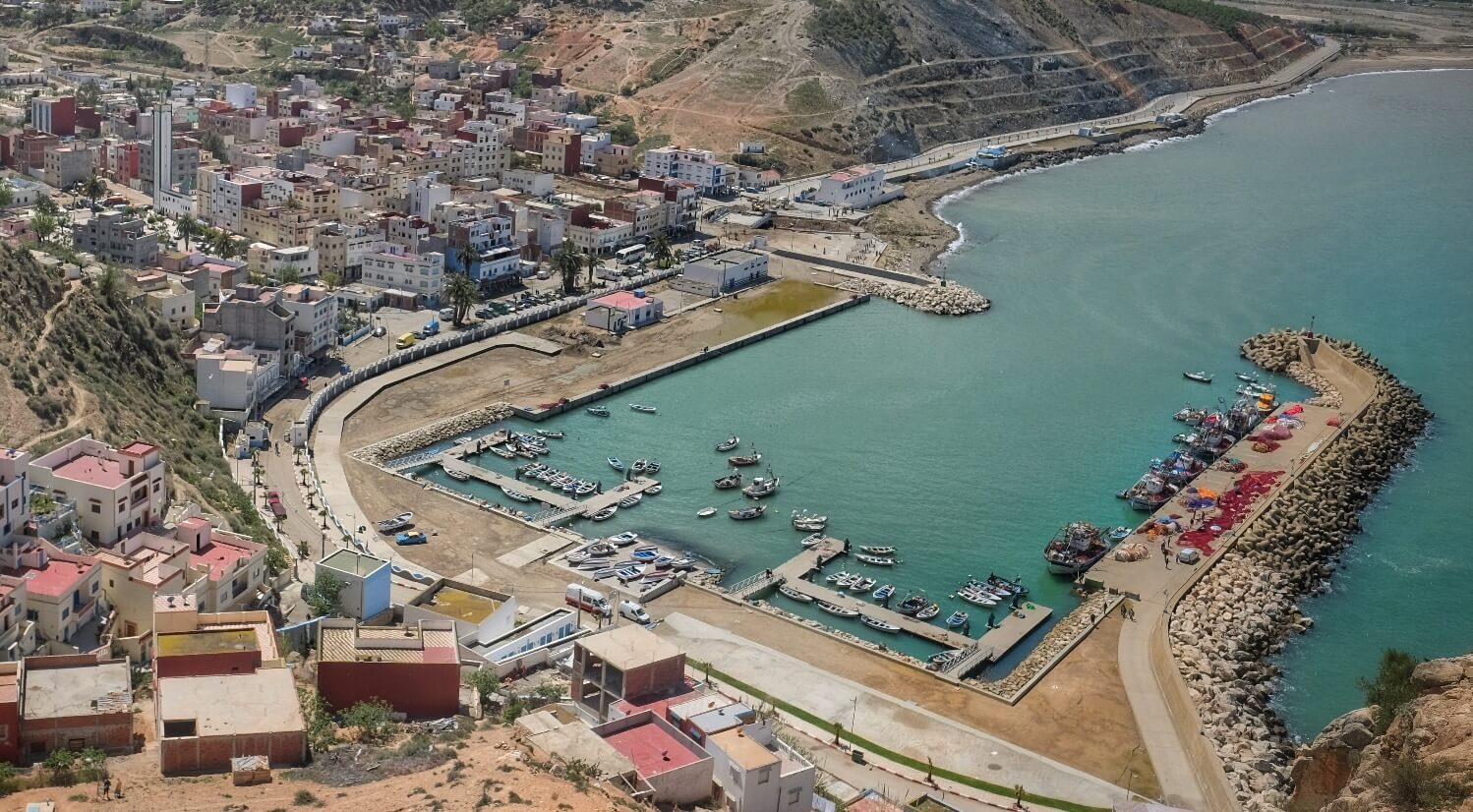
When you arrive in Jebha, you’ll quickly see that the sea is more than just a scenic backdrop—it is the beating heart of the town. As a quintessential coastal village, each of its beaches has a unique character. Aside from the main beach by the corniche—overlooked by most houses—other beaches are reachable only by sea, using small tour boats commonly found in the port.
These boats, for about 250 MAD (for up to 7 people), offer round-trip journeys not just as transport but as scenic experiences. Along the way, you can observe marine life, visit unique sea caves, and stop for photos. The first essential stop is Mersdar Beach, a natural swimming pool open to the sea, which has become the town’s iconic symbol and most famous tourist site.
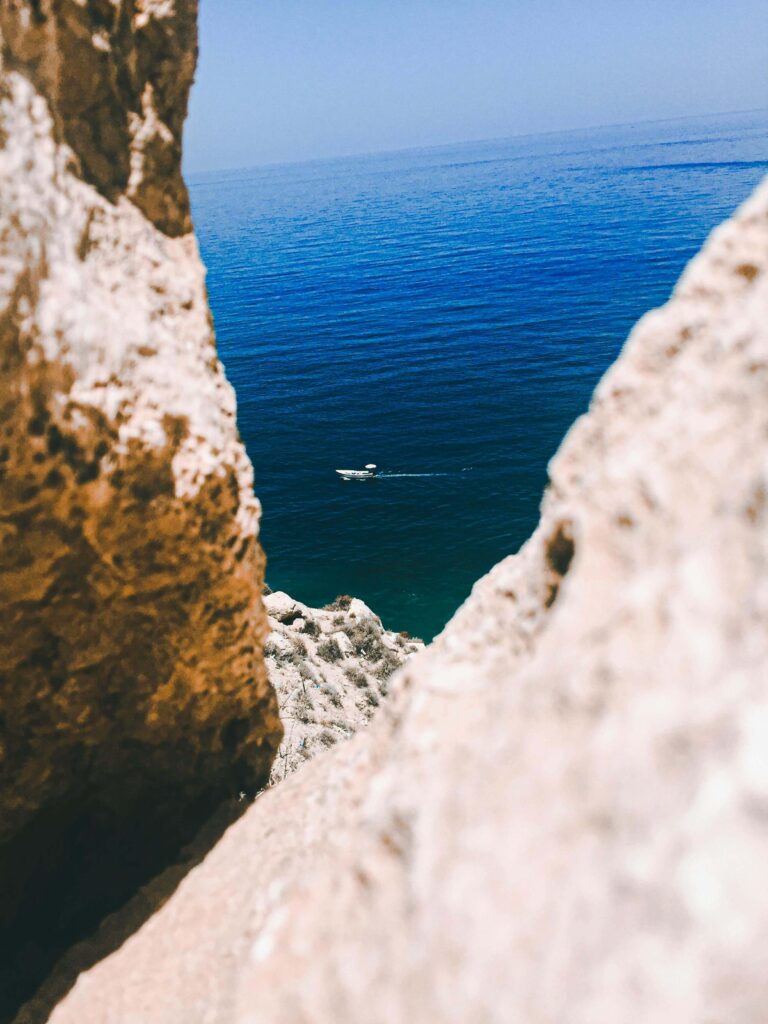
If you prefer smaller, more intimate beaches, head to Monica 1 and Monica 2, where natural formations blend wildness with serenity—giving the impression of a hidden, private retreat. Those who enjoy rocky shores and crystal-clear waters will find Al-Hawad Beach ideal. It is the farthest and most enchanting, with no sand and a rocky terrain that requires special footwear (available for sale locally). Once equipped, you can enjoy swimming in clear waters—literally side by side with fish.
For more secluded beaches, explore the Safouf Al-Houmar area, where untouched nature offers an experience of pure isolation and beauty. You can reach these beaches by car, on foot, or—if you're in a poetic mood—on a traditional fishing boat for a sea journey you’ll never forget.
Food in Jebha: Flavors from the Sea and the Spirit of the Place
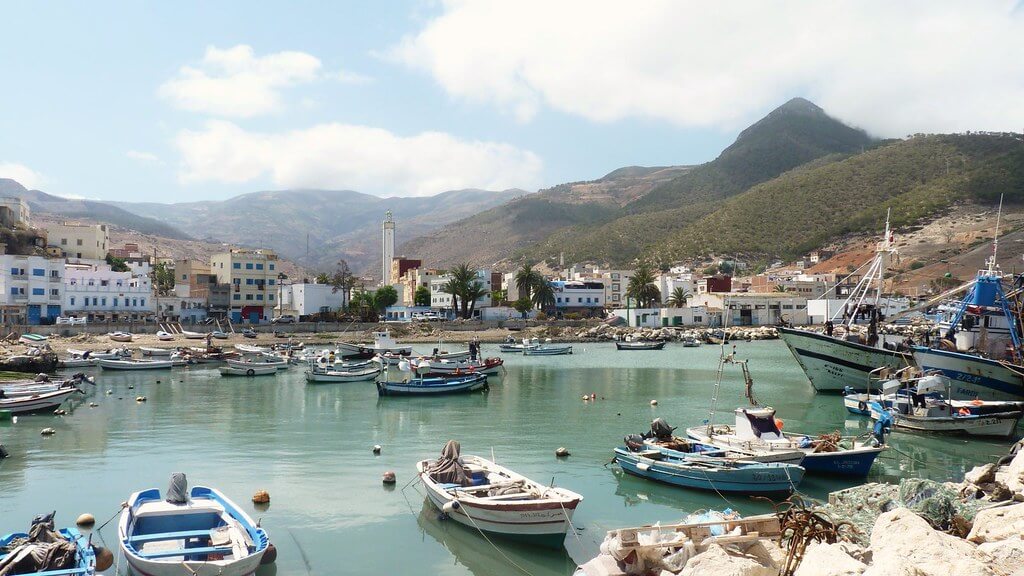
As you approach the port of Jebha, the scent of the sea and fresh fish hits your nose. Despite its small size, the port is known for its high-quality seafood, whether you're after expensive varieties or more affordable options. But the most important thing is that, wherever you go in Jebha, the taste is different. You simply cannot leave the area without trying grilled sardines. Here, fish is not just food—it becomes a dish with a unique shape and flavor, whether grilled over charcoal or incorporated into simple but delicious local recipes.
If you're looking to try an authentic local breakfast, don't miss the chance to sip a glass of mint tea with wild herbs, accompanied by warm bread from the famous "Mohamed El Bazi" bakery—affectionately nicknamed “The Professor”. Add local olive oil, free-range eggs, and traditional cheese, and you have a simple breakfast—but in Jebha, it tastes entirely different.
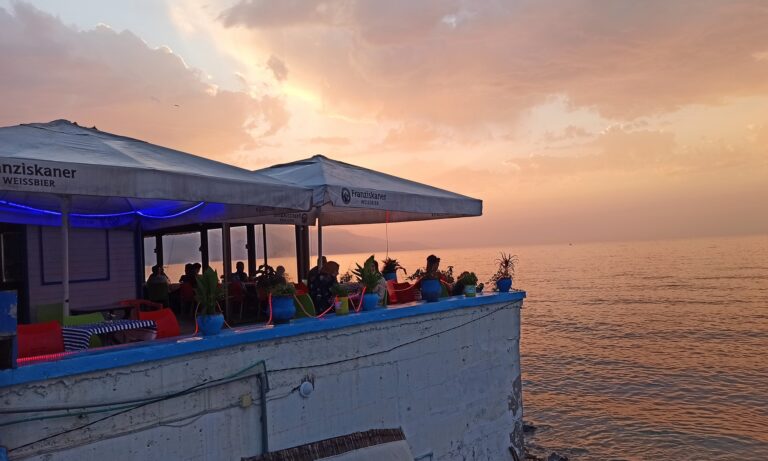
As you wander through the town, you may come across seaweed displayed along the sidewalks—gathered by locals from nearby beaches and used in traditional medicine. You might also hear old tales from fishermen about the sea, the waves, and local legends that make Jebha more than just a place—it’s a story in itself.
The Joy Doesn’t End at the Beach
If you're a fan of fishing with a rod, Jebha will feel like a little paradise. Head to the rocky cliffs, take your time choosing a good spot, and you’ll find yourself among local fishermen who have kept to their spots since dawn, patiently waiting to catch mero or other deep-sea fish. This is more than a quest for a catch—it’s a ritual of patience and peace that connects you to the place in a special way.
If diving is more your style, bring your gear and explore Jebha’s underwater world, rich with rare marine life, striking rock formations, and vivid colors—beneath waters that remain naturally clear and pure.
And don’t forget, before you leave, to give yourself time for a hike inland. Jebha is not only about the sea; it's also about the mountains. Just follow one of the natural trails surrounding the town, and you’ll find yourself in the heart of a breathtaking panoramic scene, where you can almost touch the clouds and gaze at the sea from above. The clean air surrounds you, and if you're into camping, pick a high spot and pitch your tent—you’ll be rewarded with a sunset like no other, and a silence so complete it feels sacred.
Before you close the chapter of your visit to Jebha, take a quiet moment. Stand on the beach, surrounded by stillness. Then you'll understand that this place is not just for vacation—it's a refuge where you reconnect with yourself. You discover another face of Morocco: one that is simple, honest, as pure as its waters, and as peaceful as its nights. And maybe, as you slowly leave, you won’t think much about the photos you took—but about the feelings this intimate town left in you. A sense that you had been in a place that mirrored you, or resembled what you had long been searching for. And just like that, without even realizing it, you will have promised to return.